

Why the best LinkedIn strategy happens off LinkedIn
An AI Protocol for LinkedIn's Algorithmically Invisible

What Last Week’s Essay Taught Me About Showmen, Algorithms, and the Oldest Trick in the Book
I should probably begin with a confession.
When I wrote Tuesday’s piece about LinkedIn’s new AI algorithm, I didn’t expect ten thousand people to read it in forty-eight hours. But I DID expect some people to copy entire paragraphs and like and share them as posts on the very platform I was criticising.
In fact, besides genuinely trying to be helpful, that was my true intention (as the newsletter itself said).
The response was overwhelming in a way that reveals something important about the current moment.
Monica Miranda announced she was taking a month off LinkedIn and debating whether to return.
Rachel Fairley called it catharsis.
Zaheer Merali unpacked what he called the philosophical problem beneath it all: that we’ve been “raised on a steady diet of habit and convention, and that independent critical thinking has become as rare as a flying kakapo.”
(I had to look up whether kakapos can actually fly. They can’t. Which rather proves his point.)
Dmitry Pavlotsky (who became a paid subscriber) said it was the first time in his life he’d read a newsletter the moment he woke up.
Christine Alemany tagged LinkedIn directly and told them they should always keep me in the feed.
Jason Vana observed that LinkedIn had doomed itself by becoming the place that drives creators elsewhere.
But the response that stopped me in my tracks came from Cindy Gallop.
If you don’t know Cindy, she’s a legendary advertising executive, entrepreneur, and cultural provocateur. She’s the founder of MakeLoveNotPorn, a vocal critic of tech’s worst practices, and someone whose opinion carries real weight in the industry.
Anyway, she didn’t just read the essay. She wrote an entire post about it. And in that post, she quoted this section:
“It’s not that LinkedIn’s new algorithm dislikes originality. That would imply a judgment, a preference, a stance. The algorithm has no stance. LLMs don’t understand intention just as multimodal fusion doesn’t create comprehension.
All AI systems can do is perform one function: Pattern compression.
All it can do is transform:
ideas → patterns
experiences → patterns
emotions → patterns
stories → patterns
originality → statistical deviation
This turns people’s feeds into a mathematical similarity engine, not a discovery engine.”
And then she added her own analysis:
“This is the critical distinction. LinkedIn isn’t suppressing originality. It’s making it invisible. And not because it’s bad. Or wrong. Or not interesting. But because it’s unfamiliar.”
Cindy’s post itself went viral, which validated something I’d been thinking: The problem isn’t just technical. It’s philosophical. And it matters.
Because the most common response, by far, was this: “Okay. I understand the problem now. But what do I actually do about it?”
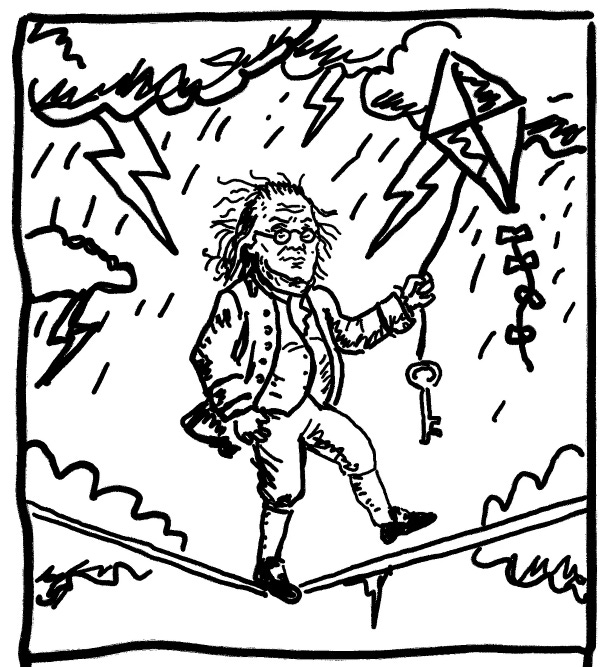
Which is the question I promised to answer. And in trying to answer it, I found myself thinking, once again, about Benjamin Franklin.
On the Curious Distinction Between Writing Things and Doing Them
You may recall that in last week’s essay, I invoked Franklin’s observation about how human beings achieve lasting significance. In 1738, he published a line in his almanac that has haunted communicators ever since:
“If you would not be forgotten as soon as you are dead and rotten, either write things worth reading, or do things worth writing.”
The elegant compression of that sentence conceals a rather radical insight.
Franklin isn’t offering a choice between two equal options. He’s observing that certain actions create a kind of gravitational pull that draws attention, whether the actor wants it or not.
You can spend your life crafting clever messages, or you can do something so interesting that other people feel compelled to craft messages about you. Or you can do both.
This wasn’t a new idea even in 1738. But it takes on fresh urgency when the gatekeepers aren’t human.
To refresh your memory: Here’s the problem we established on Tuesday
LinkedIn’s algorithm compresses every post and every person into something called an embedding (a mathematical fingerprint in fifty-dimensional space). It then matches fingerprints. If your fingerprint doesn’t resemble existing patterns, your post is never retrieved, never ranked, never shown. Which sounds great, unless of course, your goal is originality.
Originality, almost by definition, is statistical deviation. The algorithm interprets it as noise. And you can’t optimise your way out of this from inside the system, because the system doesn’t reward what’s genuinely distinctive. It rewards what’s recognisably similar.
So what do you do?
You step outside the system entirely.
You do things that turn you into a pattern worth writing about.
The question now remains…
What do I mean by “do something?”
And what kind of things should I do?
So I Did Something
As someone who is hired to help their clients do precisely that, I take coming up with personal publicity stunts for granted. These “do something” ideas come naturally to me. Nevertheless, since I view AI as a McLuhanian tool built to extend the abilities of our bodies, and thus best used to extend the skills you are actually good at (not be used for the skills you are bad at), I wondered if it would be possible to use AI help come up with “Do Thing” ideas.
So I built something.
Not a prompt (if you’ve been following me, you know how I feel about prompts). It’s a conversational tool, a structured protocol you can use with Claude or ChatGPT or Gemeni or Eden that helps you design what I’m calling Do Things “off-platform triggers and on-platform echoes.”
Protocols > Prompts
Please note the word: protocol. Not prompt. The distinction matters.
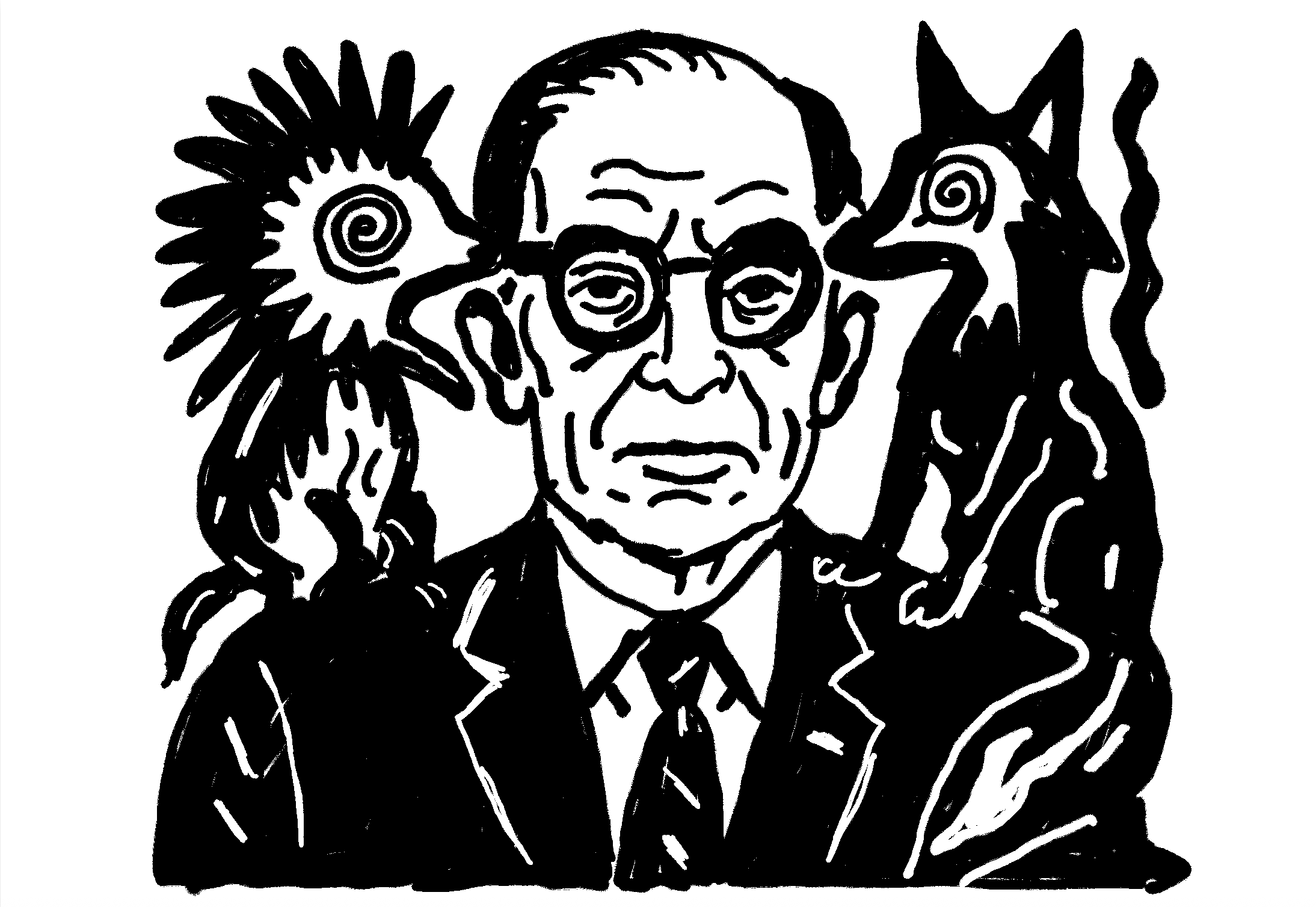
In another one of my more popular newsletters about foxes and hedgehogs, I argued that most people use AI backwards. They treat it like a vending machine: insert prompt, receive content, post without thinking. That’s how you become forgettable. Because a prompt is merely the AI part, the hedgehog, doing its pattern recognition. A protocol is something different. A protocol is human plus AI, the fox-hedgehog collision. It forces human thinking. It makes AI the tool, not the replacement.
Perhaps this is a simpler way of thinking about it:
A prompt says, “Write me something.”
A protocol says, “Help me think harder so I can write something myself.”
The tool I’ve built is emphatically a protocol. It doesn’t generate content. It generates possibilities. Possibilities that only you can evaluate, only you can select, and only you can execute. The AI handles the systematic work (the research, the structure, the pattern recognition) so you have more energy for whatever it is you need to do to turn your audience into Arthur Koestler like accomplices.
In Which We Consider What the Great Showmen Actually Understood
The philosophy behind this tool owes a debt to showmanship. Not the cheap kind. The kind that understands something profound about human attention.
The great circus impresarios knew that spectacle with no substance creates momentary distraction but no lasting impression. What they also knew is that substance alone, no matter how genuine, often fails to generate the attention it deserves. The world is noisy. Good work disappears. The solution isn’t to shout louder; it’s to create events that others find themselves compelled to talk about.
A brand (or a person, which is what a brand often is these days) achieves fame not primarily through its own proclamations, but through what others say about it. Think of a comedian. No comedian worth his salt walks onto a stage and says: “Ladies and gentlemen, the first thing you should know about me is that I am funny.” He tells a joke. The audience laughs. It is their response that establishes him as funny. They come to that conclusion themselves; it’s their contribution, as accomplices.
This is the principle:
You don’t tell people you’re interesting. You give them reasons to conclude, on their own terms, that you’re interesting. And if those reasons involve doing something remarkable in the world (something that generates its own conversation), then the algorithm has no choice but to notice.
This is not to say you can’t accomplish this by the things you post yourself or about yourself. But when you post about yourself, you’re fighting the system. When other people post about you, the system follows.
Kapeesh?

How the Do Things Protocol Actually Works
The protocol works like this.
First, you answer some questions about who you are and what you’re trying to achieve. Think…
Industry, audience, goals, risk tolerance. These establish the parameters.
Then you answer ten questions designed to unlock unconventional thinking. Questions like…
What’s the stupidest thing you could do to get attention? What is everyone else doing? (The protocol is trained to bring up the opposite.) What overused figures of speech in your industry could become literal, physical events?
The protocol then generates concepts across several categories of analog and digital spectacles. Things like…
Events that create shareable artefacts. Products or tools that compel sharing. Symbolic gestures that announce your values. And so on.
You then pick the three that resonate. The protocol expands them. You pick the one that compels you the most. It produces an implementation package: timeline, execution steps, on-platform echo strategy, measurement approach, risk mitigation etc.
At every stage, the protocol is asking you to think. It’s generating scaffolding, not content. The weird connections, the personal stories, the details that invite interpretation – those remain yours. The AI does the hedgehog work. You do the fox work. And neither can succeed without the other.
The whole process takes an hour or two. Execution takes, well, who knows. But the result, if you’ve picked well and executed credibly, is thirty days of compounding attention that the algorithm cannot suppress, because other people are generating it.
A Hypothetical Museum Nobody Asked For
Let me offer a hypothetical example to make this concrete.
Suppose you’re a UX designer. Your answers to the ten questions reveal that the stupidest thing you could imagine doing is designing a product that’s intentionally terrible (think all dark patterns, all confusion, the worst user experience imaginable) and then publicly dissecting it.
The protocol might generate an idea called “The Museum of Dark Patterns.”
You design a real website showcasing the fifty worst UX decisions in contemporary technology. You invite other designers to submit examples. You host a live event where designers critique each submission on video. You publish a report with methodology and recommendations.
The protocol then asks you if this idea brings up any other ideas by asking you three questions:
How can we make the idea more of a show than a tell?
How can we make the idea weirder
What can we add or subtract to make the idea better?
From that, you come up with an idea of creating a website that purposely has the 50 most common mistakes in it. You type that in, and then you move on to the next question and go through the same exercise.
When asked what everyone else is doing, you note that everyone else is posting design carousels and before-and-after screenshots. When asked for overused phrases, you write down “It’s not rocket science.” When asked about the invisible thing in your work you write about the hundreds of hours of research and testing behind a single design decision.
After going through all the ideas, you choose three. After looking at those, you choose the “The Website of Dark Patterns” idea. It then writes outa complete game plan, instructing you to share behind-the-scenes glimpses of the process, highlight participant contributions, and run polls asking people to vote on which dark pattern is most egregious all with plans and templates about how to pitch the story to podcosts, influencers, and even the media which they will be more than likely to accept because you’ve cut the line and positioned yourself as an authority on what not to do – which, in UX, is perhaps more valuable than knowing what to do.
It works because it’s useful (designers learn something), shareable (everyone loves complaining about bad design), credible (you’re documenting, not merely complaining), and generative (other people talk about it without being asked).
Four Principles That Should Probably Be Committed to Memory
There’s a philosophy embedded in this approach that I should make explicit.
First: the real thing happens in the world. Social media is the echo, not the main event. This is how you escape the embedding space.
Second: spectacle without substance is worthless. You can manufacture excitement, stage drama, create intrigue – but the underlying value has to be genuine. People will eventually discover whether the thing you’ve drawn their attention to was worth their attention. If it wasn’t, you’ve gained nothing and lost credibility.
Third: the best demonstrations of value are those in which people eventually understand how you pulled it off and respect you for it. The trick is revealed. The substance remains.
And fourth, perhaps most importantly: the goal is not to game the algorithm’s pattern recognition. The goal is to become a pattern the algorithm recognises.
When other people talk about you, quote your work, or reference what you’ve done, LinkedIn’s system detects relevance signals it can’t ignore. You’re no longer an outlier. You’re a topic. You’re something the algorithm recognises as worth retrieving. And then when you post about what you’ve done yourself, those posts work better, not because the algorithm suddenly understands you, but because it has already learned that people are talking about you.
A Brief Note on Guardrails, Risk Tolerance, and What This Is Not
The protocol includes guardrails. There’s an ethics checklist, compliance notes, and contingency plans. If your risk tolerance is low, it generates conservative options. If it’s high, it goes bigger. You control the dial.
But I should be clear about what this is and isn’t.
This isn’t a hack. It isn’t a shortcut. It isn’t a prompt you paste in and expect magic to emerge. It’s a structured way of thinking about how to do something genuinely worth talking about and then talking about it effectively.
Franklin didn’t say “find a clever way to get people to think you’ve done something interesting.” He said, “Do things worth writing.” The writing follows. And in our current moment, the algorithm follows the writing. Good AI makes you think harder, not think less. If you’re using it to avoid the creative work, you’re using it wrong.
The Protocol Itself (And an Invitation)
The full protocol prompt is below. Copy it into Claude, ChatGPT, or your AI tool of choice. It’s written so that it could be used just as a prompt or, for convenience, as a GPT, Claude Project, or Gemini Gem (just put it in the instruction section).
Answer the questions honestly. And remember, the weirder your answers, the better the concepts. Review what it generates. Pick three. Expand them. Pick one. Execute.
If you’d like to go deeper and you’re ready to really put Personal Publicity into action, then my Mastering the Art of Personal Publicity digital course is for you. Code SHOWTIME or BARNUM → $199 (normally $450).
Remember: it’s a protocol, not a prompt. Which means the AI is your systematic thinking partner, but the work remains yours. If you come across any incompleteness, it‘s intentional. Fill it in with questions of your own. Or your own personal stories and other trivial details that carry more of a disproportionate significance than you can imagine. The judgment about what matters. The capacity to turn your audience into accomplices.
In other words, fill it in with the things AI can’t do.
Because that’s precisely what you need to protect.
And if you build something with it, I’d like to know. Reply to this email. Tell me what you picked, why it resonated, and what happened when you tried it.
Who knows. I may have a few suggestions of my own.
