Start pricing theatrically

I watched a friend lose $50,000 several months ago.
Not in the stock market. Not in crypto. Not even in a failed business venture.
He lost it by telling the truth about his prices.
Let me explain what happened, and why it reveals everything wrong with how we think about value, pricing, and the theatrical nature of business.
In this letter, I'm going to show you:
Why the "Golden Glow" pricing principle from the 1940s still controls buying decisions today
How showmanship in business isn't manipulation - it's value enhancement
The exact psychology behind why round numbers kill sales
Why transparency is making creators broke (and what to do instead)
The 4-step Theatrical Pricing System that transformed my business
How to price based on identity transformation, not time investment
Why AI will make business theater MORE important, not less
Let's dive in.
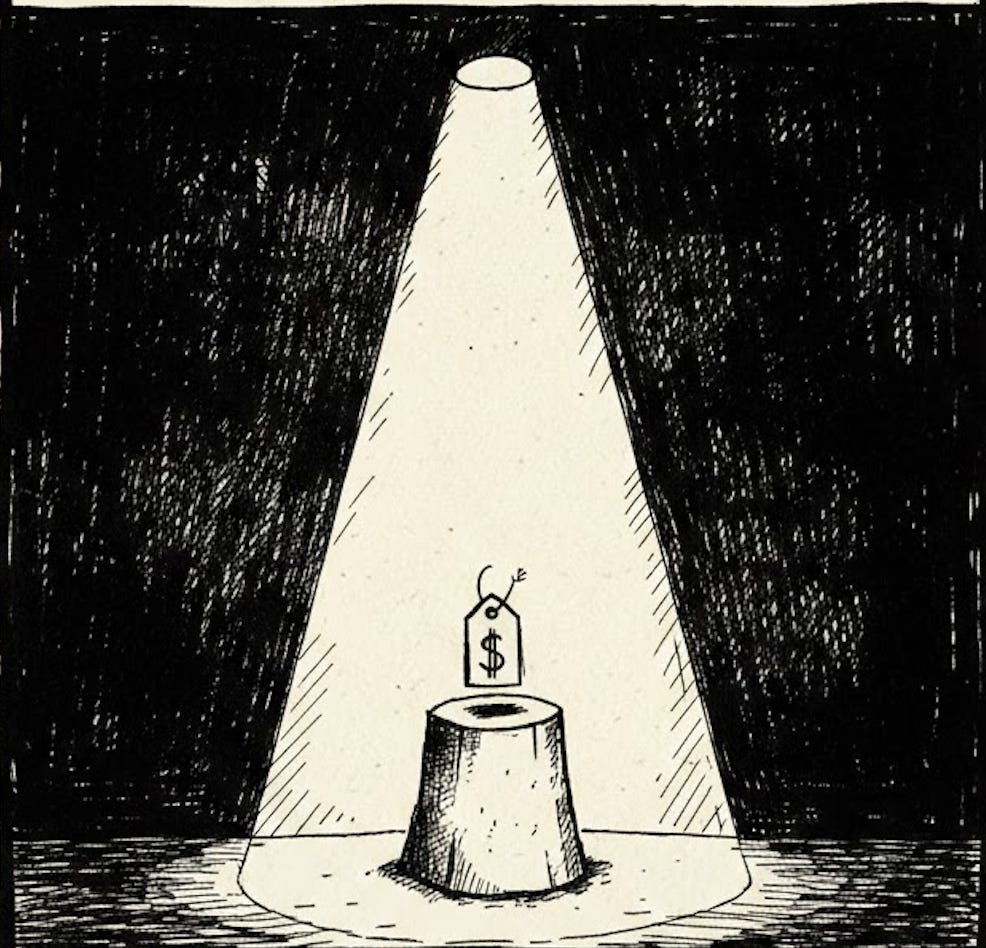
The $50,000 Lesson in Human Psychology
My friend runs a high-end consulting firm.
He decided to be "transparent" with a client. Showed them his actual costs. Explained his markup. Laid out exactly how he arrived at his $50,000 price tag.
The client walked.
Not because the price was too high. They walked because he destroyed the theater.
Here's what nobody wants to admit:
Business has always been about perception, not reality.
And the moment you try to fight this fundamental truth, you lose.
The Golden Glow Principle
There's an old pricing strategy from the 1920s called the "Golden Glow." It worked like this:
Instead of pricing something at $100, you price it at $97 or $104.
The trick was to never round the number. Or the 1 cent less or any expected figure. The number should always look random/
Why?
Because round numbers feel arbitrary. But $97? Or $106.
That feels calculated. Precise. Like someone did the math. In other words, it makes you wonder why it’s priced like that.
Now, to be clear. This type of pricing does not work for everyone. The way you price depends heavily on a whole host of factors: your industry, your product, the market, etc. For example, this pricing wouldn't work for me because I don’t want people to think they are hiring me for precise tasks, but for outcomes. In that case, $3500 works better.
The main thing I want you to understand is this:
The price you charge isn't just about the number. It's about the story the number tells.
Let me break down how this actually works:
The Three Layers of Price Perception
Layer 1: The Anchor Effect
Your price exists in relation to other prices
A $5,000 course feels expensive until you see the $50,000 alternative
A $500 product feels cheap after considering the $5,000 option
This isn't manipulation. It's context creation.
Layer 2: The Precision Paradox
$10,000 = "I made this number up"
$9,847 = "I calculated this precisely"
$10,350 = "I had to increase from my planned $10K"
Each tells a completely different story about value.
Layer 3: The Identity Investment
Cheap prices attract cheap thinking
Premium prices attract premium commitment
The price becomes part of the transformation
When someone pays $50K for consulting, they're not just buying advice. They're buying the identity of someone who invests $50K in their growth.
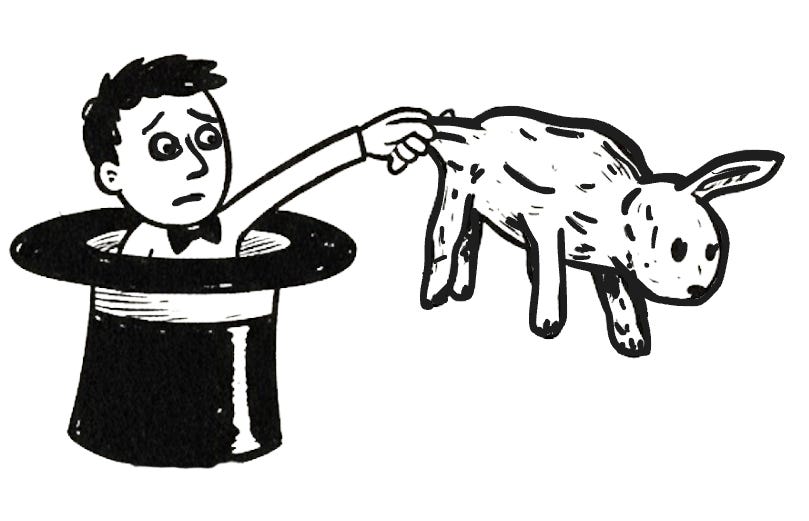
Why Transparency Is Killing Your Business
The modern obsession with "transparency" is making everyone broke.
Not because transparency is bad. But because we're being transparent about the wrong things.
Wrong Transparency:
"Here's exactly how I calculated my price"
"This only takes me 2 hours but I charge for 10"
"My actual costs are just $X"
Right Transparency:
"Here's exactly how this transforms your business"
"This is the system I developed over 10 years"
"These are the results my clients consistently get"
See the difference?
One destroys the theater. The other enhances it.
The New Rules of Business Theater
Let me give you a framework that will change how you think about this forever:
Rule 1: You're Not Selling Time, You're Selling Transformation
I don't know who the first restaurant owner was who changed the sign at the side of the road from "Restaurant" to "Eat," but what I do know is that person had showperson instincts. They understood something crucial:
To sound like a cliche:
People don't buy products. They buy identity changes.
The $5 coffee isn't about caffeine - it's about feeling sophisticated
The $2,000 course isn't about information - it's about becoming capable
The $50K consulting isn't about advice - it's about joining an elite tier
In other words: Your pricing should reflect the transformation, not the transaction.
Rule 2: Showmanship Isn't Deception, It's Enhancement
Those servers trained to be "showmen"?
They weren't lying about the food. They were enhancing the experience of truth.
Modern application:
Don't lie about results - present them dramatically
Don't fake expertise - package it professionally
Don't manipulate emotions - direct them strategically
The show enhances reality. It doesn't replace it.
Rule 3: The Frame Controls The Game
Every price exists within a frame:
Commodity Frame: "This costs $X to make, so I charge $Y" Result: Race to the bottom
Value Frame: "This saves you $X, so it's worth $Y" Result: Logical but limited
Transformation Frame: "This turns you into someone who generates $X" Result: Exponential pricing potential
The way you sell affects your personal brand.
You choose the frame. The frame determines everything.
The Showmanship System for Modern Business
Now, let me give you the exact system for implementing theatrical pricing:
Step 1: Identity Architecture
Before you price anything, answer:
Who does your buyer become?
What identity are they stepping into?
How does the price reinforce this identity?
A $27 product creates a $27 identity. A $2,700 product creates a different human being.
Step 2: Context Engineering
Your price never exists in isolation:
The Anchor Stack :
Anchoring is not a strategy. It's a story.
Present the dream outcome (priceless)
Show what others charge ($50K+)
Reveal your "accessible" option ($5K)
Make the real offer feel like a gift ($2K)
This isn't tricks. It's perspective.
Step 3: Precision Storytelling
Every number tells a story:
$2,000 = "I rounded this"
$1,997 = "I'm playing pricing games"
$2,350 = "I calculated exact value"
$2,400 = "I'm confident in my worth"
Choose your story intentionally.
Step 4: Theater Integration
The entire experience reinforces the value:
Pre-Purchase Theater:
Compelling sales page (the stage)
Strategic scarcity (the velvet rope)
Social proof (the audience applause)
Purchase Theater:
Professional checkout (the box office)
Immediate confirmation (the ticket)
Exclusive access (the VIP entrance)
Post-Purchase Theater:
Premium delivery (the red carpet)
Ongoing support (the encore)
Community status (the inner circle)
Every touchpoint is part of the show.
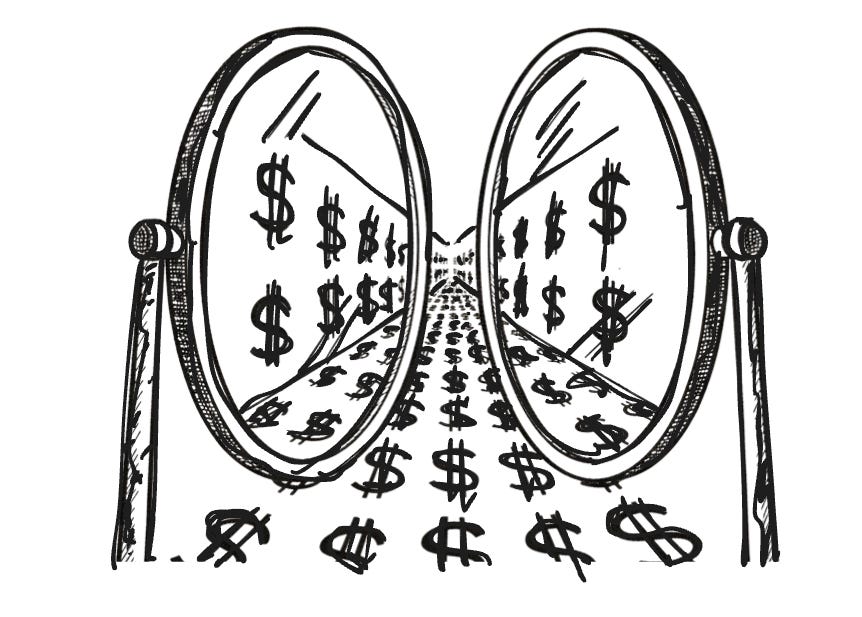
The Psychology Nobody Talks About
Here's what's really happening:
When someone buys from you, they're not making a logical decision. They're making an identity decision.
And identity decisions require theater.
Think about it:
Apple doesn't sell computers - they sell creative identity
Tesla doesn't sell cars - they sell future-forward identity
Rolex doesn't sell watches - they sell successful identity
The theater isn't separate from the value. The theater IS the value.
Why This Matters More Than Ever
In the age of AI and automation, this becomes even more critical.
Because here's what AI can't do:
Create genuine transformation stories
Build an authentic identity architecture
Design meaningful theater from experience
Price based on human transformation
The more "transparent" and "logical" the business becomes, the more valuable the theater becomes.
Because humans don't want transparency, they want transformation.
And transformation has always required a stage.
Your Move
Stop apologizing for the theater of business.
Start mastering it.
Because the choice isn't between being "authentic" or "theatrical."
The choice is between unconscious theater that undermines your value and conscious theater that amplifies it.
The way you sell and price has more influence on how people perceive your personal brand than you think.
Everyone's putting on a show.
The only question is: Are you directing yours?
– Justin
P.S. That friend who lost $50,000 by being "transparent"? He called me two weeks ago. We restructured his entire offer by adding strategic theater. He ended up closing the same client for $125,000. The product didn't change. Neither did the pricing. But the way he performed it did.
P.P.S Want to learn more stuff like this? Check out my digital offerings and masterclasses here. Use the code BARNUM to get the Art of Personal Publicity course for $199
P.P.P.S Yes, this is really my email address. And yes, if you hit reply, I will see it.