

Why you should stop caring
Why most self-help books are wrong and why the best thing you can do in today's age might be to stop caring

Imagine two candidates for a job:
The first one has a gift and no great affection for hard work.
The second one has no gift but will knock himself out trying.
Which do you hire?
The correct answer is you hire the first.
If you said the second, you are probably not going to enjoy his newsletter.
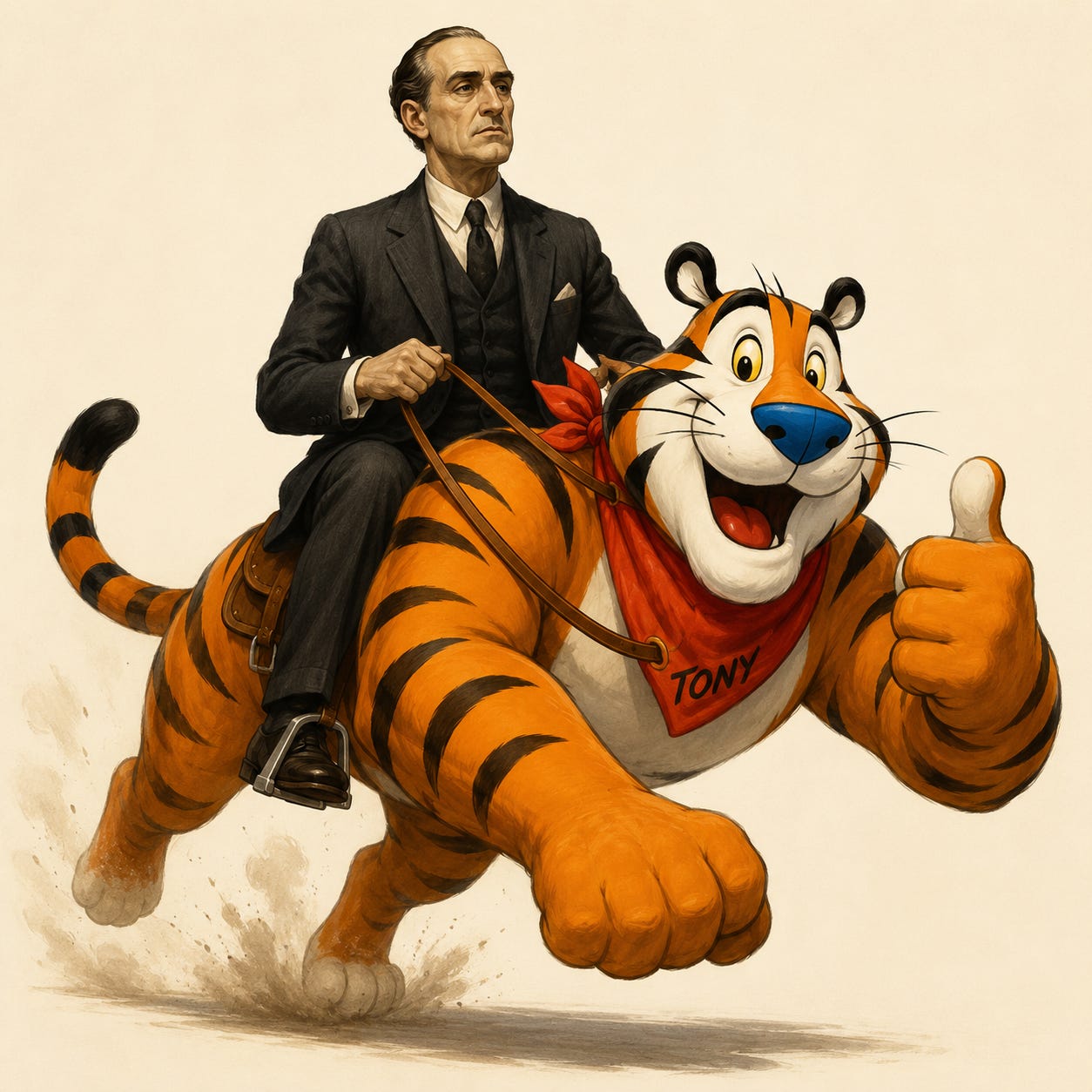
The Self Improvement Industrial Complex
The self-improvement industry is the most successful sustained advertising campaign in the history of the trade.
The fact that some of the best self-help books were written by former copywriters should be enough to make you remember that the self-help industry doesn’t sell a product. It sells a deficit.
Nobody buys the book honestly believing it will work. And you know this because you have bought eleven of them and you can name what changed after none of them. You buy it because for the price of a sandwich you get to spend an afternoon as the kind of person who is doing something about himself. And it is that feeling that is the merchandise. Not only that, it is cheap to manufacture, it evaporates in about four days, and it comes back reliably every January, which makes it the best crop in American commerce.
I’m embarrassed to admit this, but I’ve done this.
For years I sold people a feeling and called it a lesson.
Not a lie, exactly. The feeling was real. It just wore off in about four days.
Here is how the trick works
You write something that hands the reader the sensation of doing something about themselves. Not the doing. The sensation. And then you make absolutely sure the piece never solves the problem, because a cured customer is a dead account.
No industry has ever been asked to cure itself out of existence and cheerfully agreed to it. Not one. So the thing being sold was never improvement. It was the appetite for improvement, which is cheap to manufacture, evaporates fast, and comes back every January like a crop.
You have bought eleven of those books.
You can name what changed after none of them.
OberThinking: The self-help industry does not sell you a result. It sells you an appetite. A result ends the relationship. An appetite renews it.
The old me would take everything above and turn it into a lesson on how to write like a self-help author, and it would be a great newsletter, and it would work, because that stuff always works.
That is not the lesson that has been sitting on me lately.
The lesson sitting on me lately is the exact opposite one.
Because the same machinery that sells more of whatever you are selling is the machinery that has you failing at whatever you are failing at.
If you have a natural aptitude for something, you can accomplish a great deal by exercising it without working terribly hard. That being said, if you do work harder at it, you can accomplish more. If you work like mad, you may even make history. But if you are not especially gifted at the thing, you can labor at it like a monomaniac and produce only mediocrity, ending up, all pooped out with nothing much to show for it.
The entire self-improvement apparatus (and pretty much every piece of online content you read) exists to service the second person and, more importantly, to keep him or her from finding out. Because the moment they find out, the moment they accept that the thing he or she has grinded at for however long is a thing they are merely ordinary at, the revenue stops because their striving is the product. Not their progress. Their striving.
And it’s during times like this that we all ask ourselves the same question.
Is it the world, or is it me?
And in this newsletter I’m going to show you why it’s neither. And to show you why, I need to introduce you to a paralyzed Italian philosopher who published a book in 1961 about riding tigers.
Why You Don’t Care Anymore
The problem with every productivity system, morning routine, five-step plan is that it assumes the ground is stable and that if you organize yourself hard enough, the world will hold still and reward you. And you have tried. You alphabetized your life, but the numbness and the failure stayed. Then a long time comes another guru with another system, or an improved version of teh system, to tell you that the reason it failed is that you did something wrong.
The truth the self-help gurus don’t want to tell you is that you didn’t do anything wrong. Because all their tools, systems, and techniques are built for a solid world. But you and I aren’t standing in a solid world. The world today is very much a liquid one.
So the problem is not that you did something wrong, stopped caring, or feel like giving up. The problem is that you have been told your whole life that not caring or giving up is a malfunction. Or Burnout. Or anhedonia. Or a phase. Or something to medicate, or journal through, or optimize your way out of.
During times like these, the opposite is true.
As a matter of fact, during times like these, not caring may be the strongest strategy you have.
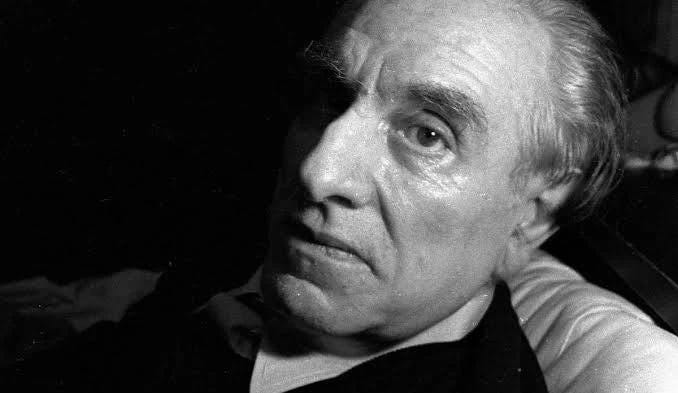
In 1961, a paralyzed philosopher named Julius Evola published a book called Ride the Tiger.
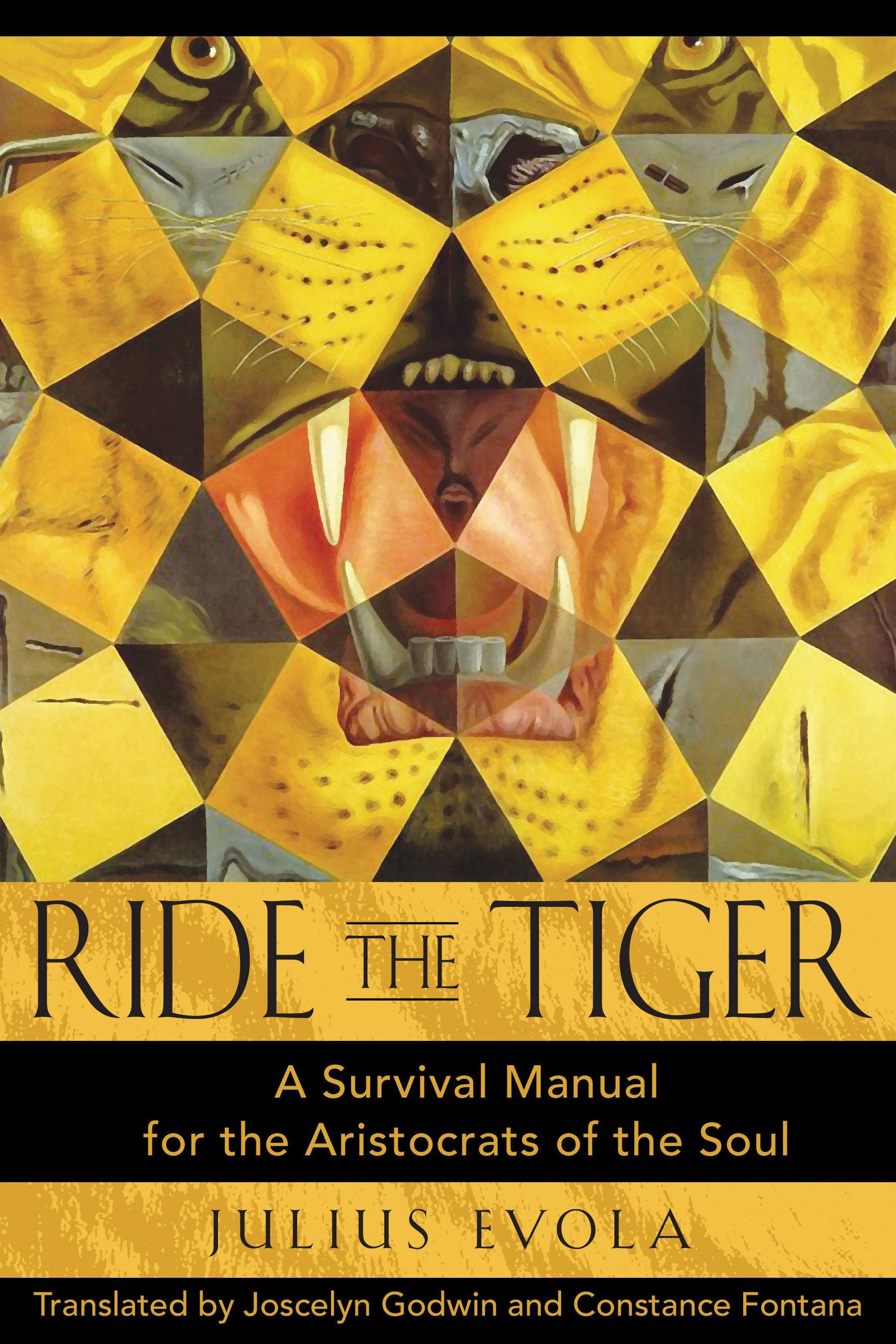
The book opens with a strange disclaimer:
This manual is not for everyone. It concerns a specific human type. The one who is involved in the modern world, works in it, moves through it, but does not inwardly belong to it. A person who feels like they answer to rules from somewhere else.
As you can already tell, Evola was a very unique and deeply compromised figure. He spent the 1930s orbiting Italian fascism, and I will be the first to say his politics deserve the rubble they are buried in. But buried inside this book is the sharpest answer anyone has written to the question eating at so many people in this Post-AI era where things move too fast, and it becomes impossible to keep up.
What do you do when you stop being able to care?
Evola’s answer begins with an old map.
Hindu cosmology divides time into four ages, descending like a staircase. Gold, silver, bronze, and then the basement. The basement is called the Kali Yuga. It is the dark age where every structure that once held religion, custom, hierarchy, the algorithm, even meaning itself, dissolves. The texts describing it are thousands of years old, and they read like your morning feed on LinkedIn where institutions are hollow, authentic bonds are optional, attention is scattered, and everything is for sale.
The basement is part of a sequence.
Meaning it is a scheduled season, not a surprise malfunction. Meaning what is happening around you is not a crisis waiting on your fix. It is a tide.
You do not take a mop to the ocean.
Now read your own history through that lens. Look at the numbness you have been treating as a malfunction. Take a closer look at your growing inability to care about the ladder, the feed, the game. When you realize that it is, for the most part, just a reaction to the basement, it stops looking like depression and starts looking like an immune response. Which means your system (or borrowed system) is not failing to engage with the world. It is just correctly detecting that much of what surrounds you is not worth engaging.
Which means you are not broken.
You are just unassigned.
But more importantly, it means that you were built for a structure that is not currently standing. The question now is what you can do about it
OBERTHINKING: Your numbness is not a malfunction. Your numbness is a reading.
Why You Can’t Just Quit, Though
Why you can’t just quit, though
People exist by the consent of other people.
I don’t mean that as a metaphor. Outside of a few hermits and outlaws, there is nobody alive whose existence doesn’t depend, daily and a little humiliatingly, on other people continuing to agree they should have one. Every handshake, every smile, every like is a small application for renewal.
So think about what that does to your self-improvement.
If your existence runs on consent, then your self-improvement was never a private project. It’s a consent-maintenance program. The 4am routine is a tithe. The endless upgrading of the self is rent, paid to stay visible to people whose approval you have never once examined and could not defend under oath.
When your self-improvement is built on the consensus about what self-improvement is, you are not trying to become better.
You are trying to remain permitted.
And I am not telling you to stop caring what people think. That advice is itself a genre, written for the independently wealthy and the genuinely deranged.
I’m telling you to find out which of your ambitions are yours and which ones you are renting.
Because once you know that, quitting changes shape entirely.
Burnout is detection sold as damage.
The morning routine is rent sold as discipline.
The system is obedience sold as freedom.
The next book is appetite sold as an answer.
And quitting, the real kind, the kind you were taught to fear like a disease, is the only honest audit most of us will ever run on our own lives.
In other words, quitting is not withdrawal from life.
Quitting is canceling a subscription you stopped reading years ago and kept paying for because the charge was small and the cancellation required a phone call.
OBERTHINKING: Quitting = reallocation (not withdrawal).
What Does It Truly Mean to Stop Caring
Several issues ago, I wrote three newsletters. The first one was about How to Want to Stop Being So Political. The Second was about How to Want to Be Less Creative. And the third one was “The Uses of Artificial Stupidity: How to Want to Be Less Good at AI.
The modus operandi behind writing them was thus:
Posts and newsletters to spur the under-ambitious are everywhere. Content to calm the habitually over-ambitious, and thereby make them more effective, is considerably less common.
Note what I am not saying.
I am not saying that ambition is a vice. All I am getting at is that perhaps one’s ambition is badly allocated. And that most of us who are trying, but failing, are pouring effort down nine chutes at once and arriving nowhere with any force, and that the most useful intervention in this case is not additional effort but the withdrawal of effort from the places it is being burned. And yes, what I am describing here is in many ways a set of techniques for breaking habits. But what makes my approach (and the approach of this newsletter) different is that the habits I am specifying are, for the most part, seen as good in the eyes of the world (and therefore also the self-help industry). Which, in a way, makes them even harder to break. But be broken they must.
So if you only get one thing out of this newsletter, let it be this: The art of giving up, put to use, means only this: you are bad at some things, no system will fix it, and the correct response is neither shame nor a better app. It is a reallocation of the energy you are frittering so you can start spending it where your gifts already sit. Everything else you can either do adequately or not do (or, better yet, hire someone to do) and stop performing for an audience that was never watching.
Which raises the harder question, the one the productivity clergy will not touch. If quitting is so obviously the correct answer, why can none of us do it?
How to Stop Caring
There are two kinds of not caring, and they look identical from the outside. But one is inherently more dangerous than the other.
The first kind is utter collapse. This is the kind of not caring that comes with a numbness of a person going under. This person needs help, not philosophy.
The other kind of not caring is detection, the flat reading of a person whose instruments work fine in a fallen age.
The difference between these two types of not-caring can only be found when something real happens. Something like, for example, AI. Because when something real happens, the collapsed person feels nothing then either. The detector, on the other hand, comes alive.
And when you stop treating your numbness as a wound and start treating it as evidence, three things shift.
First, the exhaustion lifts. Half your exhaustion is maintenance work propping up structures that serve nothing. These could be beliefs you inherited, ambitions you never chose, or even relationships running on inertia. A dissolving age like the Age of AI stress-tests everything. Whatever needs propping to survive was never yours. But whatever holds without you is what you need to hold on to. Because that is you. And being able to name the props reallocates the energy.
Second, you become uniquely equipped to act cleanly. The person who has stopped craving what this age sells can work without renting their pulse to the outcome. While your colleagues ride metrics like a mood swing, inflated by every win and by every loss. You, with nothing to grasp, can simply act by caring completely about the doing while caring nothing for the scoreboard.
Third, you stop being conscripted by the outrage machine. The feed that hands you a fresh emergency every four hours and charges your nervous system for the privilege only works when you participate. So when the pull arrives and finds nothing to grab, you get your evenings back. And your blood pressure. And your family’s dinner.
Ride the Tiger
The title of Evola’s book comes from a Far Eastern saying: when a tiger charges, you have three options. Fight it and be mauled. Run and be run down. Or the insane one: as it leaps, swing onto its back and ride it. Not to tame it, because you cannot tame a tiger. You ride it because on its back is the one place its claws cannot reach. As a matter of fact, when riding the tiger, you only control one thing: the seat. Where the tiger runs is the tiger’s business. Whether you are still on it when it stops, that is yours. And, if you keep your seat long enough, the tiger will exhaust itself. Then you can dismount alive, on your terms.
Now switch out the word tiger with AI, an algorithm change, a market change, or whatever else you feel is dissolving everything but you in the world right now.
Here are the four moves you need to make to ride those tigers. Do them in order this week.
1. The Audit. One page, two columns. Column one: everything currently holding your life up: job, relationship, beliefs, image, routines. Column two, for each entry, answer the following question: If I stopped actively propping this, performing it, defending it, forcing it, would it still stand? Do not act on anything. Just mark the props. What holds without you is load-bearing.
2. The Exposure. The numbness you have now or are beginning to feel is a flat, gray deadening tarmor that mutes everything because somewhere your system decided feeling was too risky or expensive. What you need to do now is loosen it with small, deliberate exposures to things you do not want to be exposed to. Maybe it’s the song that used to wreck you at nineteen played all the way through, volume up, without reaching for the phone. Maybe it’s the hard conversation entered without the exit already rehearsed. Maybe it’s grief, when it comes, taken straight without a chaser. Whatever they are, each one is a rep that loosens the armor. But not because you got tougher, but because you stopped outsourcing the holding to the numbness. If you feel yourself getting tougher, stop.
3. The Amputation. Pick one project you are building this week. Before each session, say it out loud: the work is mine, the result is not. Then watch for the moment mid-task when your mind leaves the work to check an imaginary vanity scoreboard like applause, or metrics, or the boss’s face. That flicker is the attachment firing. That’s O.K. Do not fight it. Just acknowledge it and return to the task. The skill is not preventing the flicker. It’s the habit of coming back and how fast you do.
4.The Unhook. Everyone has a topic that reliably hijacks them. For you it might be politics, a certain kind of news story, a specific grievance that lives in your feed. When that topic appears, something happens in your body: heat in the chest, the reply already composing itself. It’s important to realize that that pull is not you. It is the machine wearing your conscience as a costume. Most of the time for most things in life, there is no action you can actually take. The outrage or even the success is theater, and you are donating your evening, your blood pressure, and your family’s dinner time to a machine that will never know you existed.
So the next time that pull arrives, count to three.
One: name it aloud: that is the pull, not me.
Two: find where it lives in your body right now.
Three: ask whether there is any real action here that belongs to you. If yes, take it cleanly. If no, let it pass through. You just kept your seat.
A Note, Filed in the Ordinary Way
On Thursday, July 30th, at 8:30 in the morning Pacific, Tasleem Ahmad Fateh and I are teaching a free session on how to write like a human in the age of AI. Free means there is an ask at the end. There is always an ask at the end. I have just spent seventeen hundred words telling you not to be fooled about what an application is, so I will not open this one by fooling you.
But it is the same argument, not a change of subject.
Chances are, part of your feeling of numbness is the result of your feed filling with machine-made copy that is free and adequate. Adequate being the dangerous word. The machine produces, at no cost and infinite volume, the exact median of your trade. It has read everything inside your niche and nothing outside it, and it cannot drag anything back from outside the trade, because for the machine there is no outside. Which means the median is now free, and everything you publish at the median is competing against an opponent that never sleeps, never doubts, and does not need to be paid.
That is a tiger to ride.
And the free webinar is the tiger bending over to let you on.
Grab your seat on the Tiger here
Or do not. That is a live option, and I have just spent an essay defending it. But if you are going to keep filing applications, and you are, you may as well stop filing them in the same handwriting as everybody else’s machine.
Ran a command, read a file
Ran a command, read a file
This Is Not An Excuse for Doing Nothing
Riding the Tiger is not a permission slip for doing nothing. You have seen the man who read it that way. He is in every comment section. Fluent in decline, five years into building nothing and contemptuous of everyone still trying.
“The age is fallen”, he rightly proclaims.
“Nothing matters,” he mistakens. Because he still matters.
His rot is aristocratic, and none of it has anything to do with t riding anything. It is more like being dragged, with a philosophy degree. So the test never changes. The rider acts. Full intensity, zero grasping, seat held. If, for whatever reason, your detachment is making you feel smaller, or duller, or more contemptuous, it means you are not riding the tiger. And if you were, then you fell off the tiger a while ago.
Riding the Tiger feels like more life, not less.
That is how you know.
So back to the question you have been asking in the dark: Is it me, or is it the world?
And the answer , as you can see now, is that it is neither.
It is a dissolving age doing exactly what dissolving ages do. And your numbness to it is not proof that you are broken.
It is proof that you noticed.
So the next time you unlock your phone to check out whatever social media platform you check out regularly, there is a flat half-second before the feed loads. That is the tiger lowering itself for you to mount.
Happy riding.
— Justin Oberman
Rereading The Illusions of a Reluctant Messiah, a lovely parable that happens to help the self if the self wants help. Otherwise, it's just a wonderful romp into mystics who would rather be left alone because they don't care to be messiahs followed by throngs who care too much. About what? Only everything. The lending of one's pulse to the faceless masses is a brilliant line, Justin. Kudos. Ouch. Yep. OK. Through awareness, then acceptance and action (thanks to multiple self help books I do know what to do) the net result has been helping the Self to much-needed change.
As for the industry that does not want to cure it's fans? Yeah, just like MDs and most chiropractors who, btw, could go back to school and learn Chiropractic BioPhysics which actually changes the spine for good. For real. I have the x-rays as proof. But hey, why would anyone want to sell a solution when the problems are so profitable, right? What a world -
Personally, I find Mark Manson's "How to not give a F*CK" outlook quite refreshing. Self-help'ish, even. Tiger? What tiger? 🤭
Actually there has been a self help book that was helpful - written in the early 80s by Prof Issac Marks, called Living with fear . It was unashamedly behavioural, as he was but at its heart maybe it was an early version of riding the tiger. You have a fear - lean in or buckle up sonny and ride that thing.