

The difference between targeting people and actually seeing them
The Haggadah, the Black Cowboy, and whyHeinz spent decades telling people not to buy its products

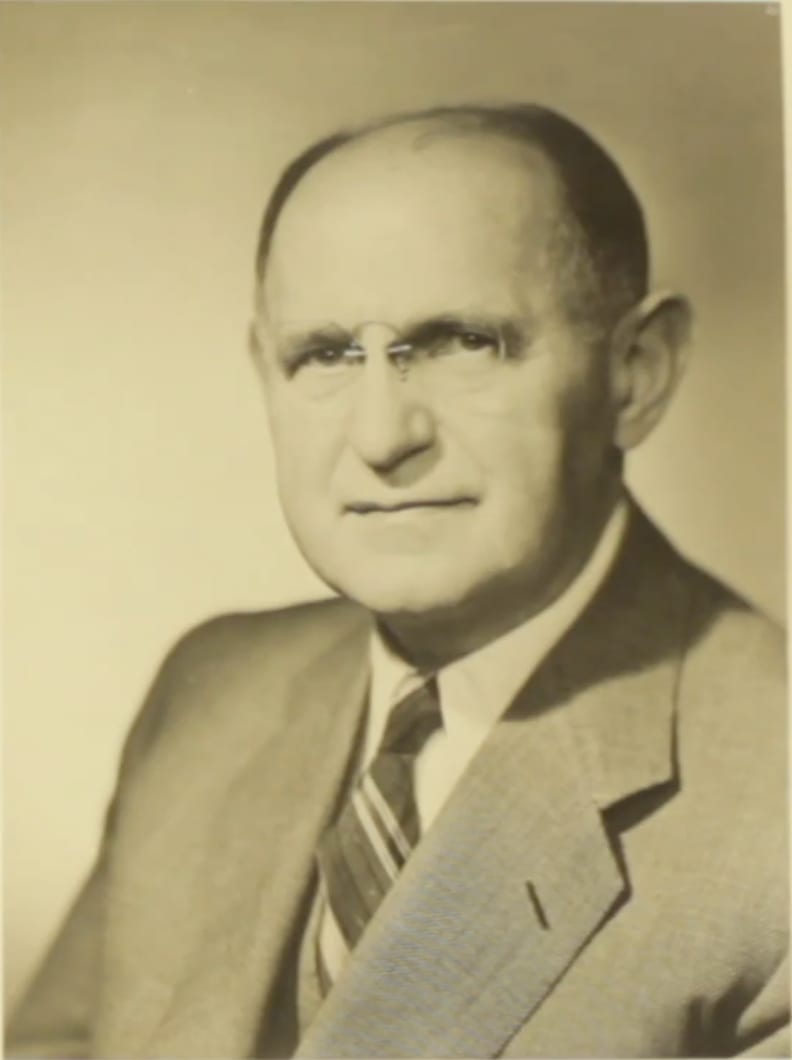
In 1923, a man named Joseph Jacobs faced a problem that should feel oddly familiar to anyone in marketing today.
Jacobs ran a small advertising agency, one of the first in America to work with major manufacturers, and he’d noticed something that the rest of Madison Avenue had either missed or chosen to ignore.
The Jewish consumer.
Not as a curiosity.
As a substantial, underserved market with specific needs, specific habits, and (this was the important part) large families with money that needed to be spent.
The client he was after was a new up-and-coming gentile brand called Maxwell House Coffee
Introduced in 1892 by wholesale grocer Joel Owsley Cheek, it was named in honor of the Maxwell House Hotel in Nashville, Tennessee, which was its first major customer. For nearly 100 years, until the late 1980s, it was the highest-selling coffee brand in the United States.
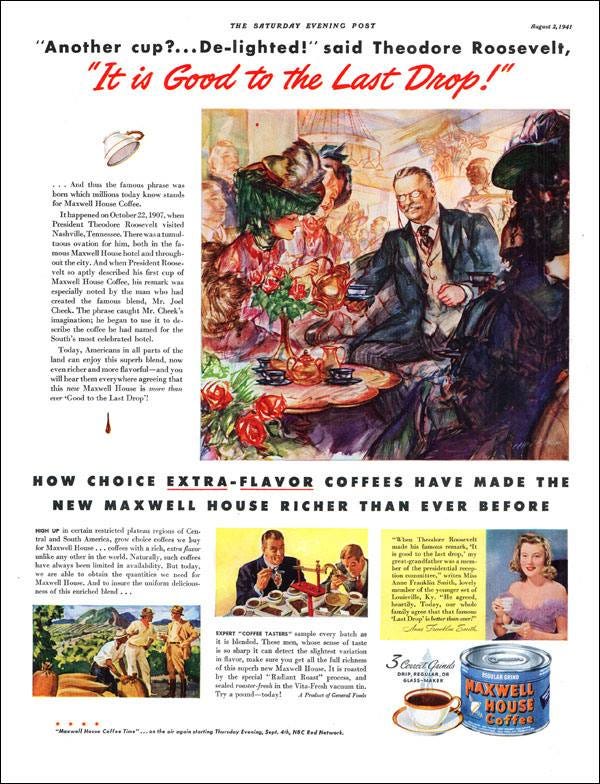
According to legend, on October 21, 1907, President Roosevelt was visiting Andrew Jackson’s estate, The Hermitage, near Nashville, Tennessee, and was served a cup of Maxwell House coffee, upon which he declared it was “good to the last drop”.
While the company promoted this story, it has never been officially proven. Some local reports from the time quoted Roosevelt as saying, “This is the kind of stuff I like to drink, by George, when I hunt bears”.
General Foods later indicated that the slogan was actually written by Clifford Spiller, a former president of General Foods.
The phrase was registered as a trademark in 1926 and, despite the conflicting stories about it, remains in use to this day.
But that was not the problem Joseph Jacobs had.
The problem he had was Passover.
You are reading my Advertising History Today Newsletter (a sub-newsletter of My OberThinking Newsletter). You can subscribe to it separately by subscribing to my OberThinking Newsletter, and manage your subscription here.
The Maxwell House Haggadah.
You see, during the eight days of Passover, observant Jews follow strict dietary laws that prohibit certain foods. Coffee beans, it was widely believed at the time, fell into the forbidden category of legumes. Which meant that every spring, coffee companies lost an entire market segment for more than a week.
The coffee bean, however, is not a legume. Although they are called "beans," coffee beans are actually the seeds (or pits) of a fruit, known as a coffee cherry
Jacobs’s solution was elegant. He found a rabbi on the Lower East Side willing to rule that coffee beans were actually berries, not legumes. To advertise that coffee is now kosher for Passover, he convinced Maxwell House to create and distribute a free Haggadah: the small book that guides families through the Passover Seder.
That Haggadah is still used by millions of Jewish at their Passover sedar till this day.

It seems like such a modest thing. A booklet given away with a can of coffee. But consider what it actually accomplished.
In homes where Jewish tradition was slowly thinning, and where the children of immigrants were drifting, sometimes consciously and sometimes not, from the customs of their parents, this little pamphlet made by a coffee company that started in a southern gentile hotel preserved the ritual and taught families how to conduct a Seder. It kept Passover alive in kitchens across America.
And it kept Maxwell House on the table.
Over sixty million copies have been distributed since 1932. President Obama used one at the White House Seder in 2009. It has turned up in prisons, on battlefields, in places no one at Maxwell House could possibly have anticipated. As Elie Rosenfeld, the current CEO of Joseph Jacobs Advertising (the agency still exists, and is still serving the Jewish market, over a century later), has put it:
Without that Haggadah, Passover in many American households might have been reduced to a glass of wine, a box of matzah, and a turkey.
Being Kosher is the Best Type of Advertising
The sucuss of the Haggadah gave Jacobs another idea.
Shortly after the Haggadah campaign, he he came up with another idea (an idea so quietly revolutionary that its full significance may not have been apparent even to him at the time).
He helped create the kosher symbol.
In the 1920s, the kosher food landscape was chaotic. Consumers had few ways to verify whether packaged foods contained what manufacturers claimed. Joseph Jacobs understood that a simple visual mark, consistently applied, could simultaneously solve a Jewish consumer problem, build brand trust, and create an entirely new market category.
So he helped establish The Orthodox Union as a certification agency in 1924 and worked alongside them to design the now-ubiquitous OU symbol, which first appeared on Heinz products in 1925, turning Heinz into the first major American brand to carry the mark (twenty-six of its products were certified kosher that year).
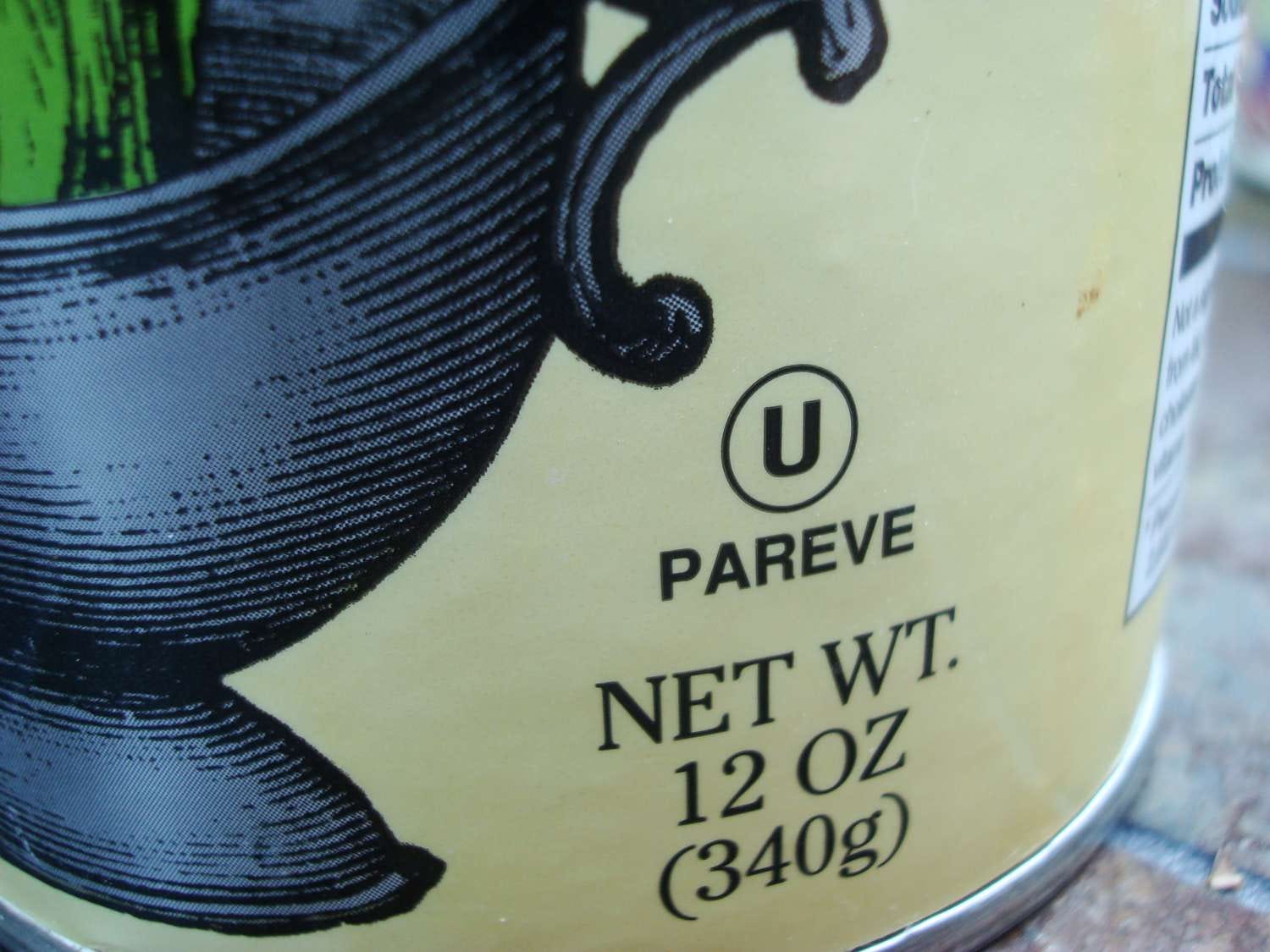
The impact of this was so significant that starting in the 1930s, Heinz ran annual advertisements in Jewish publications warning observant consumers that its products contained chometz (leavened grain) and should not be purchased during Passover. The ads appeared year after year, decade after decade: in the American Jewish Outlook in 1937, in the Jewish Criterion during wartime in 1944, in the Jewish Chronicle in 1966.
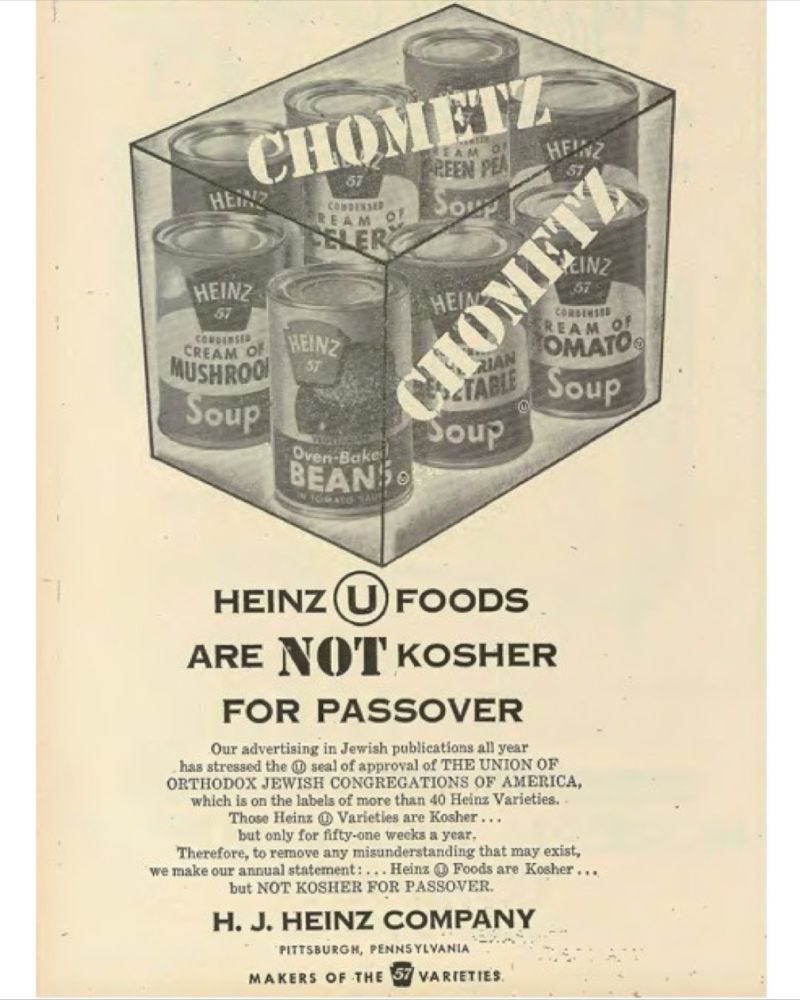
It is not often (it is almost never, in fact) that a corporation spends money urging people to avoid its products. And yet this campaign did more to cement Heinz’s loyalty among Jewish consumers than any conventional advertisement could have achieved.
Why?
Not because of what the ad said, but because of what it did.
It demonstrated that Heinz understood its Jewish customers well enough to know what they needed to hear. It showed a sensitivity to religious dietary requirements that went beyond mere commercial calculation. And it served as an annual reminder that Heinz took this community seriously enough to sacrifice a week’s revenue rather than allow a single observant household to unknowingly violate their dietary laws.
The Yellow Cap
By the late 1920s, Coca-Cola had been advertising heavily in the Yiddish press for years. The soda had become a common drink to serve at Seders, particularly during Prohibition, when shortages of kosher wine left families looking for alternatives. Jewish immigrants (and especially their American-born children) had embraced Coke as something more than a soft drink; it was, in a quiet way, a symbol of participation in American life.
Which created a problem. Because nobody actually knew whether Coca-Cola was kosher.
Rabbi Tobias Geffen of Atlanta (Coca-Cola’s hometown, which was not a coincidence) began receiving inquiries from Orthodox rabbis across the country.
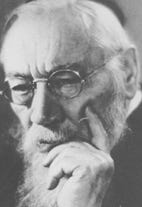
Geffen was one of the few rabbinical scholars in the American South, and he had a connection inside the company: Harold Hirsch, Coca-Cola’s general counsel, who happened to be a Reform Jew. Geffen pressed Hirsch for access to the formula. The company resisted. Geffen’s response was characteristically direct: if he couldn’t see the secret formula, he would have to rule that Coca-Cola was not kosher. Six months later, Coke capitulated, and Geffen became one of a handful of people in the world to learn the recipe.
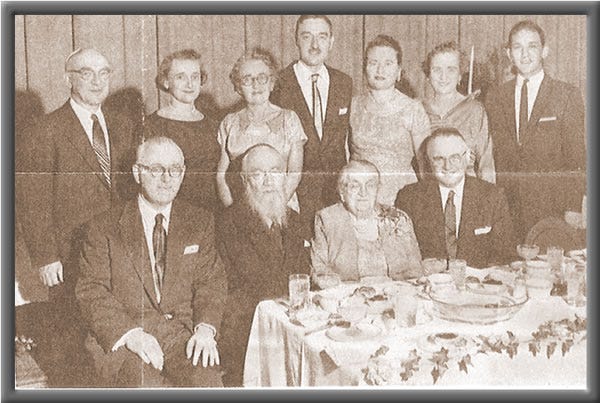
What he found was not encouraging. The formula contained glycerin derived from non-kosher beef tallow (a byproduct of soap manufacturing from cattle and pigs) and traces of alcohol derived from fermented grains. Both were problems. But Geffen understood something about his community that a less perceptive rabbi might have missed. As he wrote in his ruling, it would be “an insurmountable problem to induce the great majority of Jews to refrain from partaking of this drink.” Coke had already woven itself into American Jewish life. Banning it was not a realistic option.
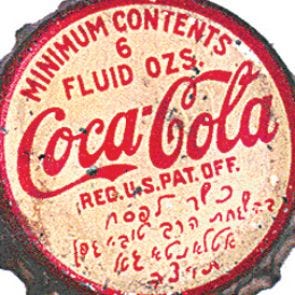
So he presented the problem to the company as a solvable one. Coca-Cola’s scientists replaced the tallow-based glycerin with glycerin from cottonseed and coconut oil (supplied, as it happens, by Procter & Gamble). Pleased that Coca-Cola’s ingredients were now all kosher, Rabbi Geffen issued a response in 1935:
“With the help of God, I have been able to uncover a pragmatic solution according to which there would be no question nor any doubt concerning the ingredients of Coca-Cola”, he wrote. “It is now possible for the most stringent Halachist to enjoy Coca-Cola”.
That alone would have been a remarkable story. But then came a second chapter.
In the 1980s, Coca-Cola switched its standard American formula from cane sugar to high-fructose corn syrup. For most consumers, this was a footnote. For observant Jews during Passover, it was a crisis. Corn is classified as kitniyot (too closely related to the grains that produce leavened bread) and is forbidden during the holiday under traditional Ashkenazi law. The drink that Rabbi Geffen had spent years making kosher was suddenly off-limits again, at least for one week each spring.
Coca-Cola’s response was, I think, quietly extraordinary.
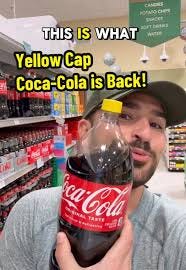
Every year, just before Passover, bottles of Coke appear on shelves with bright yellow caps and a small Hebrew inscription confirming they’re kosher for the holiday. The recipe inside is identical to regular Coke except for one thing: real sugar instead of corn syrup. (Which, incidentally, is what was in Coke’s original formula all along. And which many people, Jewish or otherwise, insist tastes better.)
Now consider the economics.
There are roughly eight million Jews in America. Perhaps a million are observant enough to care about corn syrup during Passover. Making the Passover batch requires scrubbing down factories and changing the recipe. It costs Coke millions. And the Passover Coke sells at the same price as regular Coke.
Whatever they’re spending, they’re not making it back in one week of sales.
So why bother?
Because Coca-Cola was the first major American brand to reformulate a product for kosher requirements (twice, in fact, half a century apart), and in doing so it helped establish the entire infrastructure of the kosher food industry. More importantly, it earned something that no amount of precision targeting can deliver: the loyalty of a community that was accustomed to being ignored.
Whatever Coke loses on the Passover batch, it makes back many times over through year-round brand loyalty from a market where tradition and repurchase are practically synonymous.
Coke didn’t target the Jeiwhs population. It saw them.
Targeting vs Seeing
Let me explain what I mean by that, because the word “targeting” has done quite a lot of damage to our thinking.
The modern marketing vocabulary treats consumers as prey. We “target” them. We use “precision” media to “reach” them. We build “segments” and deploy “personalization” to ensure that our message arrives at exactly the right inbox, at exactly the right moment, with exactly the right offer. The metaphor is military, and the mindset is extractive. We are hunters. They are quarry.
And it doesn’t work nearly as well as we think it does.
There’s a well-established body of evidence (much of it compiled by the IPA in Britain, analyzing nearly a thousand proven advertising campaigns) suggesting that targeted, activation-focused marketing delivers short-term results but does almost nothing to build the kind of brand warmth that sustains businesses over time. Because what actually builds brands, and what has always built brands, is something closer to fame. And the curious thing about fame is that it must be, to some extent, indiscriminate. Because a brand that is known only to its buyers isn’t really famous at all.
Now, you think that segmented marketing would prove this theory false.
But here’s where it gets interesting.
Because the history of segmented marketing (particularly the marketing to Black, Hispanic, and Jewish Americans ) doesn’t actually support the “targeting is everything” narrative that digital marketers have been selling us for two decades.
It supports something rather different, and, if you as me, something rather more hopeful.
The Pepsi Challenge
In 1947, a man named Edward Boyd joined Pepsi-Cola.
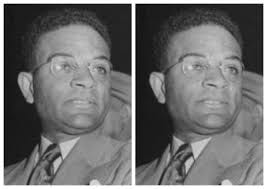
Boyd was an African-American UCLA graduate and former actor who’d grown weary of the stereotypical roles Hollywood offered Black performers. Pepsi’s president, Walter Mack, hired him to lead something unprecedented: a team of Black salesmen tasked with selling Pepsi to the “Negro market.”
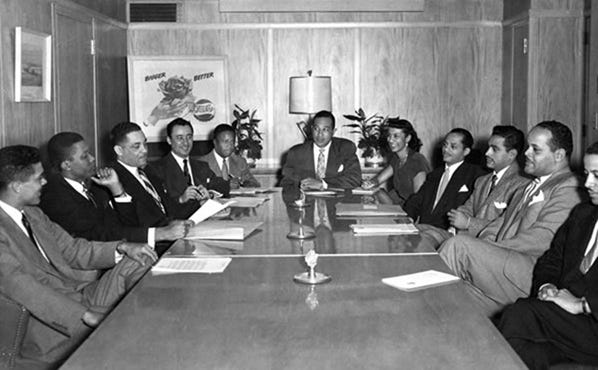
Before Boyd arrived, the state of Black representation in American advertising was (to put it charitably) appalling. If African-Americans appeared in advertisements at all, they were caricatures: Mammy figures, minstrel-show stereotypes, servile and undignified. The message, implicit but unmistakable, was that Black Americans were not real consumers, or if they were, they certainly didn’t deserve to see themselves reflected with any kind of dignity.
One business historian has argued that Boyd faced a harder challenge than Jackie Robinson. Robinson had to compete at the same level as white players. Boyd and his team had to do something arguably more threatening: compete for the same jobs, in the same offices, in a corporate America that wasn’t ready for Black professionals who weren’t carrying trays.
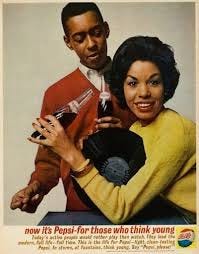
Boyd’s revolutionary idea was breathtakingly simple. He created advertisements that depicted Black Americans as normal, middle-class people.
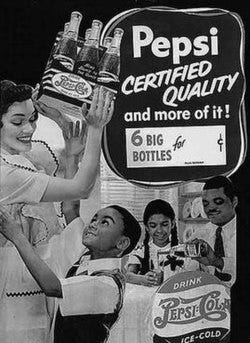
A mother holding a six-pack of Pepsi while her son reaches for a bottle. (That son, incidentally, was a young Ron Brown, who would grow up to become Secretary of Commerce.) A campaign called “Leaders in Their Fields” that profiled prominent African-Americans like Nobel Peace Prize winner Ralph Bunche. Students at historically Black colleges, living aspirational lives.
The results were extraordinary.
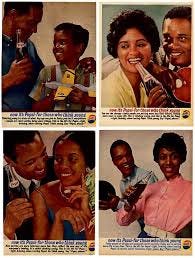
Pepsi’s market share in Black communities surged. So much so that in Chicago, Pepsi overtook Coca-Cola for the first time. Boyd’s team, traveling through Jim Crow states, enduring segregated trains and Black-only hotels, facing threats from the Ku Klux Klan and insults from their own Pepsi colleagues, had accomplished something that corporate America had assumed was impossible. They’d proven that Black consumers would respond powerfully to advertising that simply treated them as human beings.
And then the whole thing fell apart.
At a 1949 meeting at the Waldorf-Astoria, Pepsi’s president, the same Walter Mack who had championed the initiative, told five hundred bottlers that the company needed to ensure it would not become known as (and here I must use his exact word, because the historical record demands it, and because the ugliness of it is itself instructive) “a n*gger drink.”
Boyd walked out.
He understood Mack didn’t hold those sentiments personally, but the damage was done. By 1950, Boyd had left Pepsi, and support for the program evaporated.
Black People Deserve Black Lungs Too
Two decades later, in 1971, Philip Morris came to a man named Tom Burrell with what they thought was a perfectly reasonable request.
They wanted a Black Marlboro Man.
Their idea was to take the existing Marlboro campaign ( the cowboy, the horse, the lasso, the wide-open country) and simply reshoot it with a Black actor.
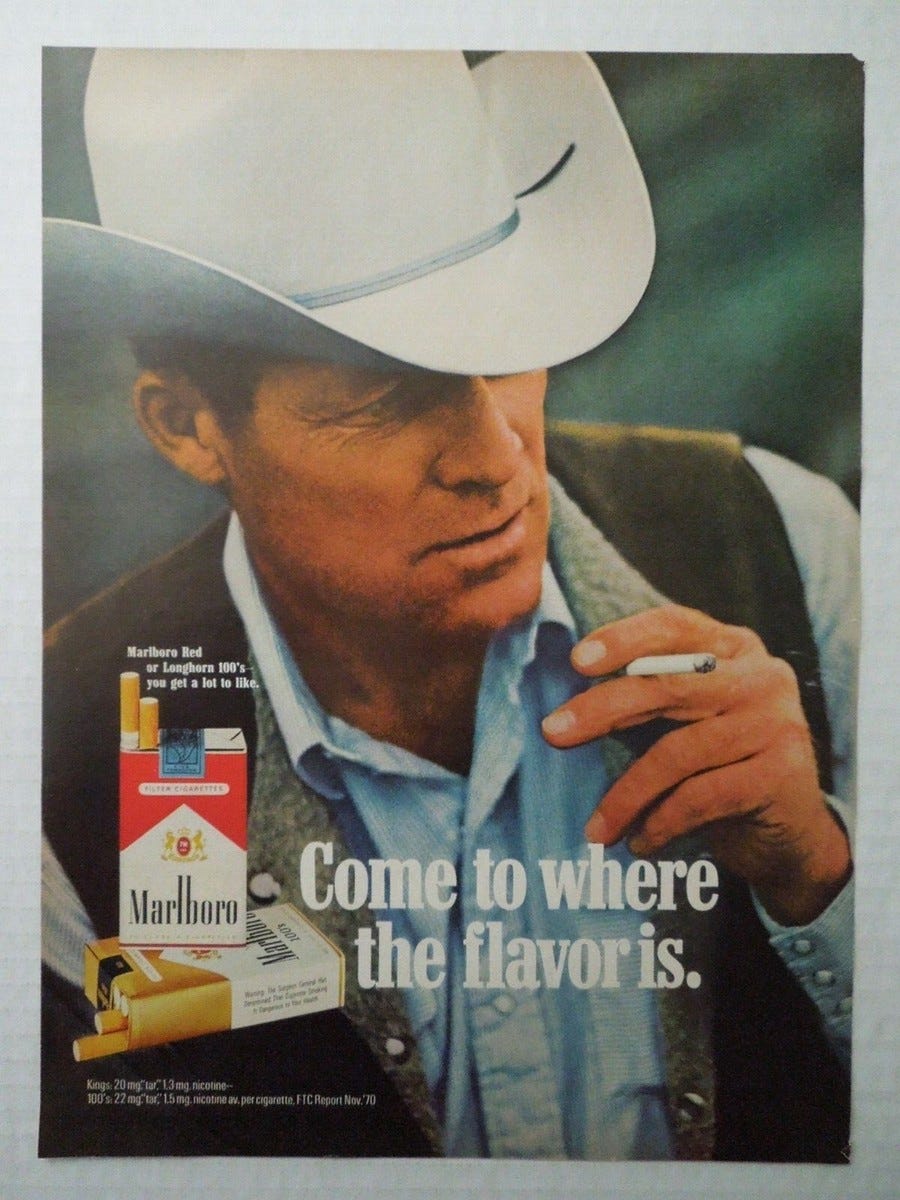
Burrell, who had started his career in Wade Advertising’s mailroom and was now running his own agency, said no.
His reasoning was captured in a phrase that became his life’s mantra: “Black people are not dark-skinned white people.”
He told Phillip Morris that the original Marlboro Man worked because he embodied a specific set of American myths (frontier independence, the lone cowboy, mastery of nature) that resonated deeply with white Americans. But those myths carried very different connotations for Black Americans. As Burrell told NPR: “When you start talking about a hundred years ago, you lost me on that, too, because that’s the last thing I want to do is go back a hundred years with a bunch of rural, cowboy white guys, doesn’t sound too safe.”
So Burrell did something altogether more sophisticated.
He identified the essence beneath the cowboy: confidence, coolness, self-assurance. Then he translated those qualities into a culturally authentic context for Black consumers. The new Marlboro figure for the black community wasn’t a cowboy. He was an urban man, stylish, composed, woven into the fabric of Black community life. And the setting wasn’t the wilderness; it was the city.
He even shortened the tagline “Come to where the flavor is” to just “Where the flavor is.” The way cool Black people would say it.
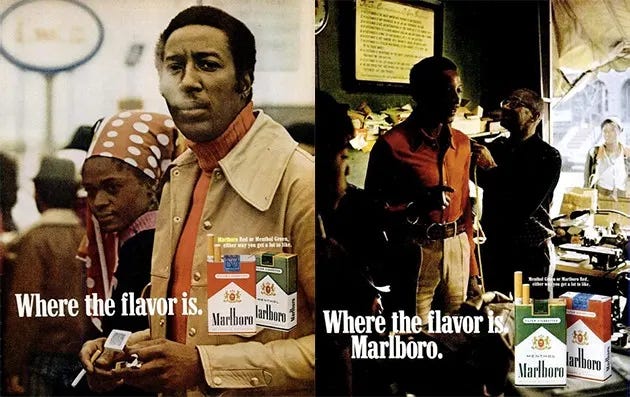
Unfortunately, it worked brilliantly.
And it worked because Burrell understood something that the precision-targeting advocates of our own era consistently miss: you don’t reach people by aiming at them. Your reach them by understanding them.
Man, Oh Manischewitz
And this is where the two threads of our story (Jewish marketing and Black marketing) converge in the most unlikely of places: a bottle of sweet kosher wine.

The Manischewitz food company was founded in Ohio in 1888, specializing in kosher foods like matzo. After Prohibition was repealed, the secular Monarch Wine Company struck a deal to license the Manischewitz name for a wine brand (borrowing the Manischewitz rabbis for kosher certification as part of the bargain). The wine was fermented and bottled in a sprawling facility at the Bush Terminal on 2nd Avenue in Brooklyn: convenient for the nearby railroad that carted in Concord grapes from upstate New York, for the ports that shipped product out, and for the thriving Jewish community of Lower Manhattan just across the harbor.
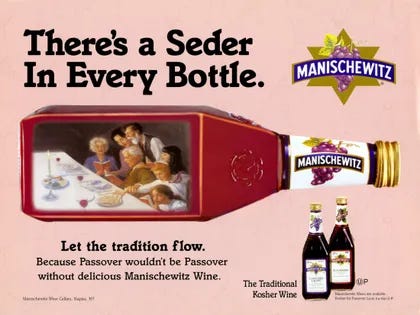
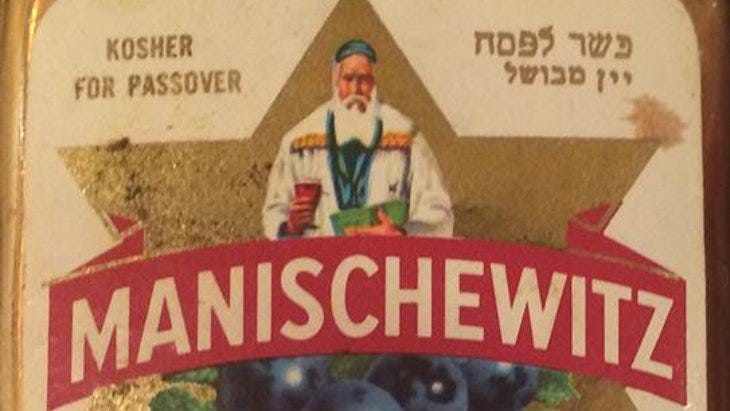
In the 1940s, the branding amd marketing for Manischewitz (done by the Joseph Jacobs advertising agency) leaned heavily on the wine’s religious origins. The label featured a bearded rabbi clutching a sacred text in one hand and a glass of wine in the other. The word “Sacramental” was splashed across the front in capital letters, adorned with Hebrew script. It was, by all appearances, a product made by Jews, for Jews, and destined to remain in that niche forever.
Most kosher wine brands of the era were precisely that (as the historian Roger Horowitz puts it in his book “Kosher USA: How Coke Became Kosher and Other Tales of Modern Food,” they tended to “be made by Jews, for Jews”). But Manischewitz was different. From the start, it mobilized its kosher characteristics, its Hebrew lettering, its religious imagery, not to wall itself off from the broader market but to sell to non-Jews too.
Then Joseph Jacobs created the slogan “Man, oh Manischewitz!” and everything changed.
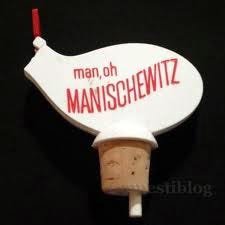
The tagline was so catchy that Apollo 17 astronaut Gene Cernan blurted it out during his 1973 moonwalk. It inspired a doo-wop single by a group called The Crows ("Mambo Shevitz," not exactly a chart-topper, but evidence of the brand's penetration into popular culture).
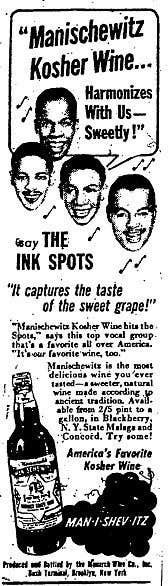
Black musicians featured in print advertising campaigns: the Ink Spots appeared in a 1950 ad in the Pittsburgh Courier declaring that the wine "harmonizes with us, sweetly!"

But what truly transformed the brand was its choice of television spokesman: Sammy Davis Jr.
Davis was, in the parlance of the marketing industry, a unicorn. He was one of the biggest entertainers in America, a member of the Rat Pack, familiar to every household in the country. He was also African-American. And he had converted to Judaism. In one person, he embodied the intersection of two communities that most marketers would never have thought to connect.
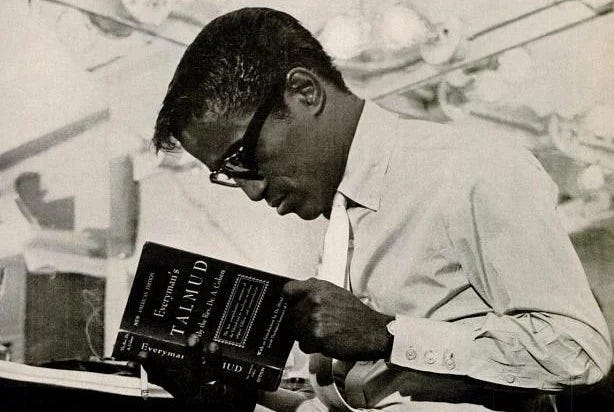
Picture the television spot: Davis at a piano, shirt slightly unbuttoned, a goblet of Manischewitz Almonetta in hand, pounding out a clunky melody in the rhythm of the French children’s song Alouette. Debonair, charming, and looking like an extremely fun person to share a drink with. As Horowitz explains, Davis “wasn’t going to antagonize Jewish consumers” while being immediately familiar to Black audiences. In the language of modern marketing, he bridged two segments. In the language of reality, he was simply famous.
And so it worked.
A 1957 survey polling Jews, African-Americans, and white gentiles in New York, Los Angeles, and Detroit found that seventy-two percent had seen a Manischewitz ad on television, and nearly half had heard one on the radio. By 1973, the company was pouring roughly eighty-five percent of its magazine advertising budget into placements in Ebony.
Sales graphs showed peaks at Christmas and Thanksgiving several times higher than at Passover. Even St. Patrick’s Day caused a discernible rise. By the mid-1950s, some eighty percent of Manischewitz wine consumers weren’t Jewish. As late as 1981, Forbes magazine described the typical Manischewitz drinker as an urban, blue-collar African-American man.
The Most Famous Rabbi In America
Think about what I am describing to you here”
A Jewish wine, with Hebrew lettering on the label, endorsed by a Black entertainer who happened to be Jewish, being consumed at Christian holidays by consumers who weren’t Jewish at all.
If you had described this scenario to a modern “precision targeting” advocate, they would have told you it was incoherent.
Or that the audience segments don’t align.
Or that the messaging is contradictory.
Or that the brand identity is confused.
And yet…
The very thing that made Manischewitz’s crossover success seem impossible by modern targeting logic is exactly what made it work.
And that thing, once again, is Fame.
Because fame doesn’t respect segments.
As a matter of fact, fame, as I believe more and more deeply with each passing year, must be spectacularly untargeted to be of any real value.
Does this mean their weren;t other factors? Of course not.
Horowitz speculates that the wine’s appeal to Black consumers may have had roots deeper than advertising alone: The Concord grape flavor was similar to wines commonly made from scuppernong and muscadine grapes in the American South. (He’s even heard stories of Baptist churches purchasing kosher wine during Prohibition as a straightforward way to skirt regulations.) The cultural affinity was already there. But what made them choose a sweet Jewish wine over others was the advertising. Specifically, advertising that made the brand famous.
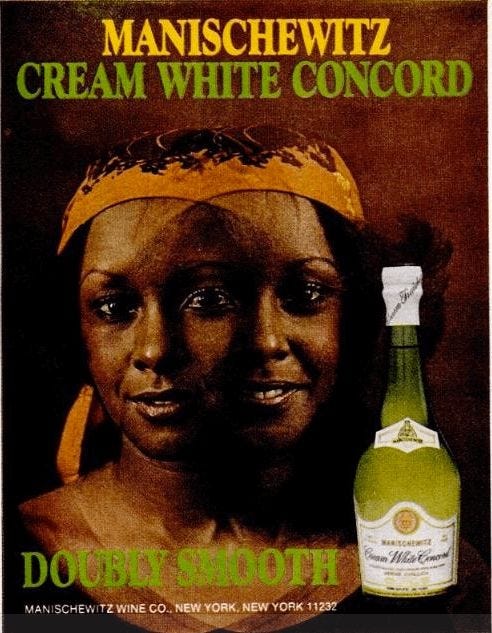
Whatever the reason, at the height of the brand’s popularity, Manischewitz was producing roughly thirteen million gallons per year. And through it all, it never abandoned its Jewish identity. When it released a brand extension (the Cream White Concord in 1968), it shrank the rabbi on the label. But he was still there. The Hebrew lettering remained. And Horowitz observes, “A name like Manischewitz is unmistakably Jewish.”
You can shrink the rabbi, but you can’t make him disappear.
The Thread
This, I believe, is the thread that connects Joseph Jacobs in 1923, Edward Boyd in 1947, Tom Burrell in 1971, Sammy Davis Jr. at the piano, and whoever is sitting in a marketing meeting right now trying to decide how to allocate next quarter’s digital spend.
The Maxwell House Haggadah didn’t “target” Jewish consumers the way a programmatic ad buys a demographic slice.
It served them.
It understood what Passover meant to Jewish families (not as a data point, but as a lived experience), and it created something genuinely useful. It was, perhaps, something close to what Seth Godin refers to as permission marketing.
Another way I like to put it is that it didn’t interrupt the ritual; it became part of it.
Similarily, the yellow-capped Coke didn’t “target” observant Jews by calculating ROI on a one-week production run. It demonstrated, through product and behavior rather than advertising, that the company understood what it felt like to be part of a community whose needs are routinely overlooked.
Heinz’s anti-ad didn’t “target” Jewish consumers at all. It did something far more powerful: it showed them it was paying attention.
Boyd’s Pepsi campaigns didn’t “target” Black consumers by inserting a product into their media consumption. They dignified Black consumers by depicting them as the Americans they actually were.
Burrell’s reinvention of the Marlboro Man didn’t “target” Black smokers by swapping skin tones in an existing template. It demonstrated the kind of empathy (the ability to see through another person’s eyes) that is arguably the rarest and most valuable quality in all of marketing.
And Manischewitz, through the improbable vehicle of Sammy Davis Jr., demonstrated that when you stop thinking about segments and start thinking about people, a Jewish wine can become a universal drink.
Sorting Is Not Seeing
Meanwhile, back in the algorithmic bowels of whatever platform is currently selling you “precision” (the dominant theory of segmentation has gone in precisely the opposite direction).
Today’s version of segmented marketing is almost entirely mechanical. We slice populations by data points: age, location, browsing history, and purchase behavior. We build “lookalike audiences,” “custom segments,” and “retargeting pools.” We measure clicks, conversions, and cost-per-acquisition. And we call this targeting.
But it isn’t seeing. It’s sorting.
And that difference matters enormously.
Jacobs saw that Jewish families needed a way to maintain tradition while participating in American consumer culture. Boyd saw that Black Americans needed to see themselves reflected with dignity. Burrell saw that cultural authenticity was more persuasive than cosmetic adaptation.
What does the algorithm see?
Purchase history. Zip codes. Time-on-page.
It seems to me (and I’ve been pondering this for longer than is probably healthy) that we’ve confused the mechanism of delivery with the act of understanding. We can now deliver a message to almost anyone, almost anywhere, at almost any time. What we seem to have lost is any sense of what that message should say. Or how the person receiving it might actually feel about hearing it.
There’s a concept in communication theory that suggests receivers don’t merely absorb messages (they actively participate in creating their meaning). Which is why a Jewish family opening a Maxwell House Haggadah doesn’t just receive an advertisement. They co-create an experience. And why a Black consumer seeing Boyd’s dignified Pepsi campaigns doesn’t just register a brand impression. They feel seen.
This is the dimension that no amount of programmatic precision can replicate.
Algorithms can find people.
Only empathy can see them.
The Question Worth Asking
If I were advising any brand today that was genuinely interested in reaching an underserved community (and I don’t mean “reaching” in the digital-advertising sense of delivering impressions, but in the human sense of connecting with) I would start not with the media plan but with a question.
What does it actually feel like to be a member of this community? What are their specific frustrations, their unmet needs, their cultural touchstones? What would it look like for a brand to show up not as a marketer, but as someone who had been paying attention?
The Maxwell House Haggadah answered that question for Jewish Americans in 1932. The yellow cap answered it again in 1935. The Heinz anti-ad answered it by demonstrating what it refused to sell. Boyd’s “Leaders in Their Fields” answered it for Black Americans in 1947. Sammy Davis Jr., improbably, answered it for everyone at once.
All of these answers created loyalty that lasted generations (not because they “targeted” efficiently, but because they saw clearly).
Targeting is a technology. Seeing is a skill.
One can be bought. The other must be earned.
And it seems to me (though I’m not entirely certain, and I’d welcome disagreement on this) that the brands we remember, the ones that become part of our lives rather than interruptions to them, have always understood the difference.
The Lesson for You Or Anyone Trying to Build A Personal Brand
Everything we’ve been discussing (the Haggadah, the yellow cap, the Heinz anti-ad, Boyd’s dignified Pepsi campaigns, Burrell’s reinvention of the Marlboro Man, Sammy Davis Jr. at the piano) shares a common principle that extends well beyond corporate marketing. It applies, with equal force, to anyone trying to build a reputation in their field.
The goal of your social media presence should be the same thing that made all of these campaigns work:
Fame.
But tot the targeted, circumscribed, algorithmic fame the gurus and platforms huide you toward. I;m talking about the broad, indiscriminate, spectacularly untargeted kind. The kind where people who may never hire you still know who you are and what you stand for. The kind where your name comes up in rooms you’ve never entered.
But here’s the problem. The platforms are making this harder, not easier.
Every algorithm update pushes you toward a smaller, more “relevant” audience. The feed shows your posts to people who already engage with you and hides them from everyone else. LinkedIn’s own systems are optimised for activation (clicks, comments, shares) rather than for the thing that actually builds lasting professional reputations: broad, sustained visibility among people who don’t yet know they need you.
Which is why it seems to me that what most people call “personal branding” has become a kind of trap. You optimise your profile keywords, schedule. posts and engage strategically with the right accounts. And the algorithm rewards you with a slightly larger echo chamber of people who already agree with you.
But AI might put it:
That’s not fame.
That’s a mailing list with better graphics.
As the examples above prove, targeting your audience doesn;t mean targeting your adience with messaging. Real influence doesn;t come just from talking to the right people (although that is very important). Real infience comes from being embedded in the conversation, not just present in the feed. It comes from acts of genuine visibility that transcend the algorithm’s narrow definition of relevance.
Which is why I’ve come to believe that the distinction worth making isn’t between having a personal brand and not having one. It’s between personal branding (which the platforms have reduced to a set of optimisation tactics) and personal publicity (which is something altogether different and considerably more powerful).
Personal publicity is what happens when you stop asking “how do I reach my target audience?” and start asking “how do I become known to people who don’t yet know they’re my audience?” It’s the professional equivalent of the yellow cap: a signal that travels far beyond the people it was ostensibly designed for.
Personal branding is what happens as a result of personal publicity.
This is what I help my clients with. And for those who want to learn the mechanics themselves, I’ve built a digital course called “Mastering the Art of Personal Publicity” that teaches how see people and build the kind of broad, indiscriminate professional fame that no algorithm can contain.
Because targeting is a technology. Seeing is a skill. And being seen (truly, widely, unmistakably seen) is something else entirely. •
- Justin Oberman
Advertising Philosopher & Historian
Follow me on LinkedIn
My courses: Stan Store

P.S I should note, before concluding, that the history of ethnic marketing in America is not a story of uncomplicated progress. Boyd was driven out by casual racism at the highest level of the company that employed him. Burrell’s brilliant work was, after all, in the service of selling cigarettes (a product that has disproportionately devastated Black communities). The Joseph Jacobs agency’s early clients included R.J. Reynolds, for whom it organized block parties in Jewish neighborhoods to distribute free cigarettes around Jewish holidays. The Maxwell House Haggadah is a masterpiece of cultural integration; it is also, inescapably, a piece of commercial manipulation.
History is rarely tidy.
But the marketing lessons endure.