Most people guard their knowledge like it’s gold in Fort Knox.
They believe that sharing their expertise will create competition or devalue their own worth. They hoard information, thinking it gives them an edge.
But what if I told you the opposite is true?
What if sharing everything you know is actually the most content and powerful personal brand strategy available to you?
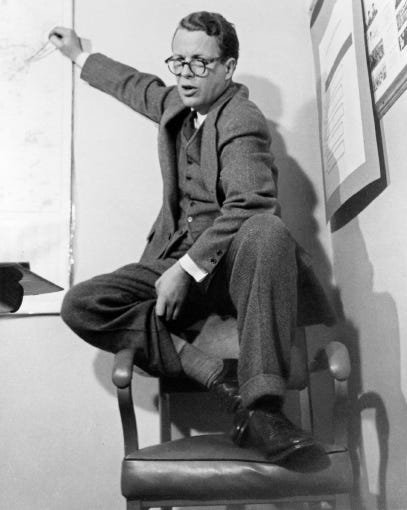
The David Ogilvy Method
David Ogilvy, often called “The Father of Advertising,” understood this principle better than anyone. Despite starting his advertising career at the late age of 38, he built one of the most successful agencies in history by giving away all his secrets.
Ogilvy would take out full-page ads in the New York Times with headlines like “How to Create Automobile Advertising That Sells,” followed by literally 100 points about how to do it. He published books like “Confessions of an Advertising Man” and “Ogilvy on Advertising” that revealed his entire methodology.
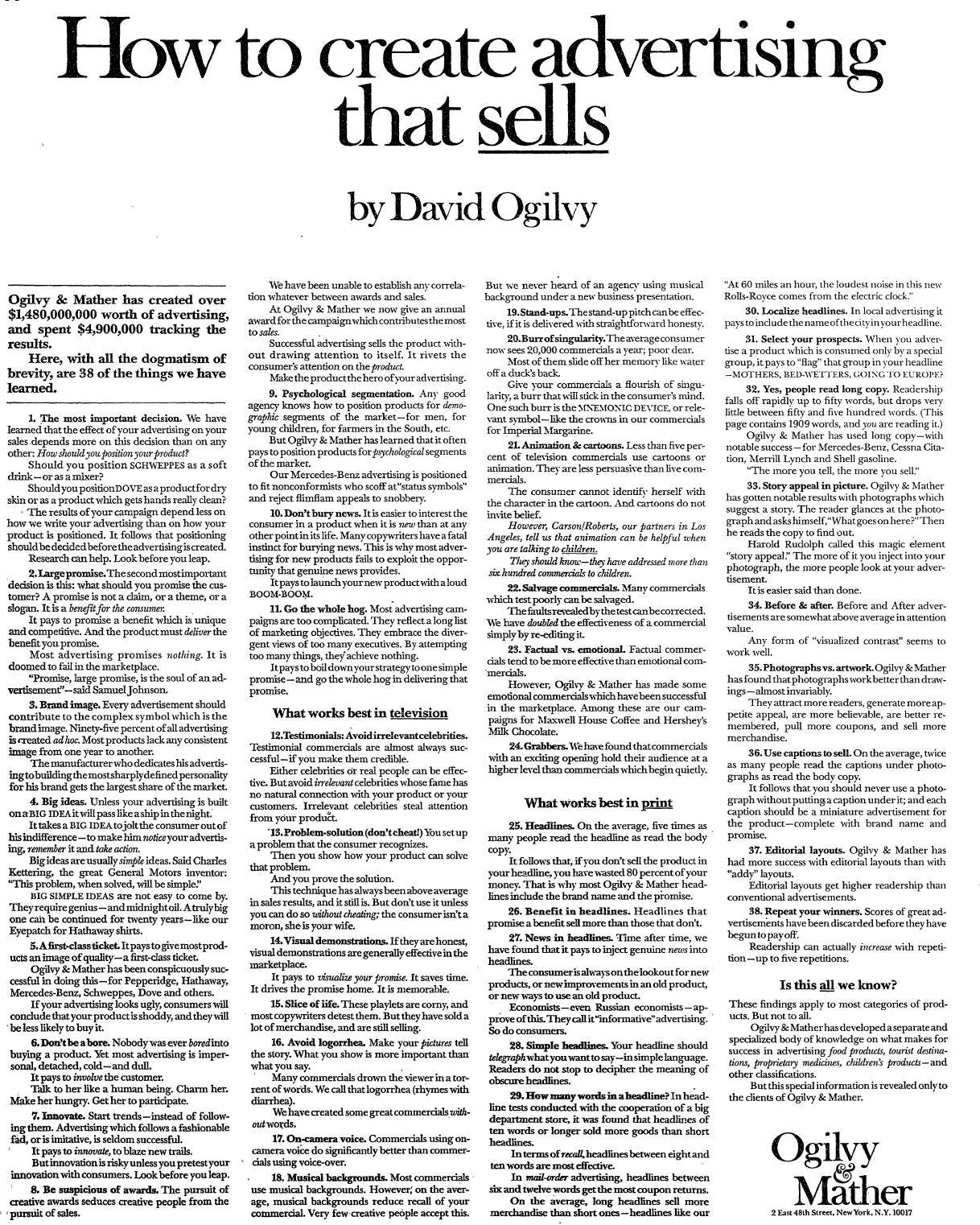
He wanted Ogilvy & Mather to be seen as the smartest agency about advertising. And it worked.
When a board member asked him, “Why give away all this knowledge?” his answer was simple:
“Because nobody is actually going to go and do it—they’re busy with their business. But what it does is show that we know the most about advertising.”
And there is a very profound truth and insight in there for anyone building a personal brand today.
The Truth About Teaching Your Craft
Ogilvy once also pointed out that the technique of creating good advertising is actually simple, but it takes years to master. There’s an intuition you only gain through repetition and practice.
This is true of any industry, so it’s also crucial for anyone building a personal brand to understand.
Just because you share your methods doesn’t mean others can instantly replicate your results (with or without AI).
You can read David Ogilvy’s books front to back, but are you ready to spend 22 hours a day thinking about advertising as he did? Probably not. If you’re like most people, you’ll pay him to do it instead.
Why You Should Think Less Like a Brand and More Like a Chef
A lot of people don’t know this, but before David Ogilvy started Ogilvy, he was once a chef at one of France's greatest restaurants. In his book “Confessions of an Ad Man,” he talks about the things he applies from the experience of running a 5 Star kitchen to running his agency.
One thing he didn’t talk about was how chefs promote themselves, which I think he picked up on as well. Because when you think about it, chefs are among the first professionals to master the art of personal publicity and branding.
One of my clients is a chef. And the one thing I learned really quickly is that chefs do not become rich and famous from their restaurants. They become rich and famous by writing a cookbook. In other words, by sharing their recipes and techniques. The world's most famous chefs have cookbooks, cooking shows, and masterclasses that reveal every detail of their processes. Does that stop people from eating at their restaurants? I think you know the answer to that.
Think about it: Gordon Ramsay could keep his recipes secret, but instead, he demonstrates exactly how to make them on television. Has this created competition? No, it’s made him a global brand and enhanced his reputation as a master.
As Jason Fried and David Heinemeier Hansson point out in their book “Rework,” businesses should “emulate chefs by teaching their competition.” They encourage businesses to figure out the equivalent of their own cooking show.
Creating Your Educational Content Strategy
To implement this approach, ask yourself what your "recipes" are. What’s your cookbook?
What can you tell the world about how you operate that’s informative, educational, and promotional?
What techniques, tools, or processes have you mastered?
What have you recently learned that’s worked for you?
And don’t worry. You don’t need to wait until you’ve mastered something to teach it. The minute you learn something, turn around and teach it to others. Share your reading list. Create tutorials. Take people step-by-step through your process.
Why?
Because teaching doesn’t subtract value, it adds to it. When you teach someone how to do your work, you generate more interest in your work. People feel closer to you because you’re letting them in.
Best of all, when you share your knowledge, you receive an education in return. When your content is valuable, people will engage, offering their perspectives and experiences, creating a virtuous learning cycle.
The Right Mindset Shift
This approach requires a fundamental mindset shift. You must abandon the scarcity mentality that keeps you clutching your knowledge like a miser.
The impulse to keep what you’ve learned to yourself isn’t just shortsighted; it’s destructive. In the digital age, obscurity is a far greater threat than someone “stealing” your ideas.
As the saying goes: “Anything you do not give freely becomes lost to you. You open your safe and find only ashes.” My chef client puts it another rather stoic way. He says that his goal is to “die empty.” That is to say, his goal is to end each day and even his life having given the world everything he’s got. Including the knowledge of how he does many of the things he gives
This doesn’t mean spamming people with your content. LinkedIn is full of people who want their stuff to be read but don’t read anyone else’s posts.
The people who build the best personal brands aren’t looking for collaborators and kindred spirits. They acknowledge that good work isn’t created in a vacuum and that the experience is always a two-way street.
Five Content Formats That Work
When sharing your expertise on LinkedIn, try these formats:
The listicle (like Ogilvy’s ads and memos):
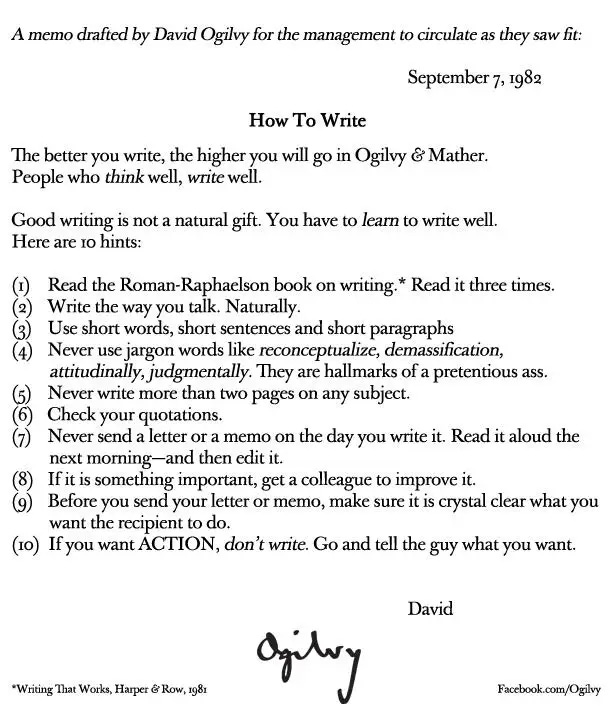
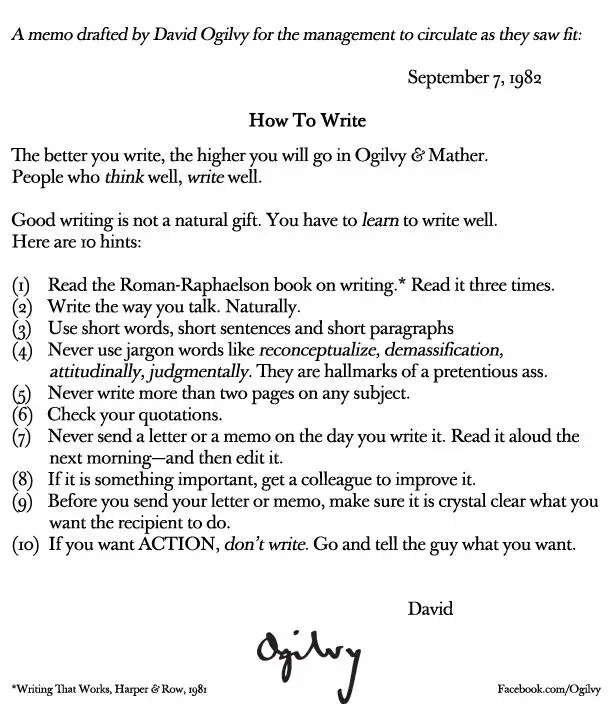
The carousel: Visual breakdowns of your processes.
The lesson as a story (yours, a client’s, or someone you admire. My favorite way of doing this is history.
Example 1
Example 2
The step-by-step guide: Detailed instructions anyone can follow
Example 1
Example 2The behind-the-scenes reveal: Show your actual work process
Example 1:
P.S. If you’re ready to actually build this
For the last few years, I’ve been teaching exactly this: how to stop renting attention and start owning a reputation, inside my digital course on Mastering the Art of Personal Publicity
It’s the system I use with private clients to turn smart, accomplished people into recognized public figures in their fields. Not “LinkedIn influencers.” Public figures. The kind of people who get booked, quoted, hired, and paid because of who they’re known to be, independent of any platform.
The full course is here: https://stan.store/justinoberman Use the code SUBSTACK to get 30% off.
And if you want the live, condensed version, I’m running A Masterclass on how to Never Run Out of Ideas to Write About in June. It’s a single high-intensity session where I walk you through the exact frameworks I use to never run out of ideas to write about, which, as you can imagine, rely a lot on doing things worth writing about. If you’ve been grinding LinkedIn for years and getting smaller and smaller returns, this is the off-ramp.
Grab a seat here: https://stan.store/justinoberman/p/free-monthly-masterclass-8ieoh5pc
If you already know how to publicize yourself and have plenty of ideas to write about, but just want to learn how to write better and how to make your AI sound more human, then check out my Copy Hunter Guide to Writing Better in the Age of AI. (Yes, the one I discussed in the post example from three years ago above)/ It’s almost done, but I’ve started a presale so that people can get it for $70 instead of 200. Just use the code PRESALE at checkout.
Algorithm Proof Yourself
Every week on LinkedIn, I write a newsletter called The Anti-Guru.
This week, I talked about Richard Van de Blom and his research reports on algorithms. I break down what’s true and what's not true and what you should be really doing to make yourself immune to the whims of the algorithm.
I don’t mention it explicitly, but sharing everything you know is definitely one of them.
Join 6k subscribers here
Through it all, remember this fundamental principle:
In order to educate, you need to learn.
In order to learn, you need to be interested in the stuff going on around you.
If you want fans or followers, be a fan or follower first.
If you want to be accepted by a community, be a good citizen of that community.
If you want to get, you have to give. If you want to be noticed, you have to notice.
Shut up and listen once in a while. Then share what you’ve learned.
I promise you, when you share your knowledge, you won’t be seen as giving away your value; you’ll be seen as the authority.
And that’s worth more than any secret you might keep.
- Justin Oberman
Follow me on LinkedIn